Professional Mobile Car Vacuuming: The Ultimate How-To Guide for a Pristine Interior
- Gavin lawson
- 4 hours ago
- 12 min read

Why does your vehicle’s carpet still feel gritty and look dull after an hour of exhausting work with a standard shop vac? Most car owners realize that surface-level suction is rarely enough to tackle the deep-seated debris that accumulates over time. Whether it's stubborn pet hair woven into the floor mats or fine sand from a weekend hike in Caledon, standard tools often lack the mechanical power to achieve a true deep clean. You deserve an interior that feels as fresh as the day you drove it off the lot.
This guide reveals the secrets of professional mobile car vacuuming, showing you how to bridge the gap between a quick tidy-up and a showroom restoration. We'll break down the specialized equipment, such as high-performance wet/dry vacuums and specific agitation tools, alongside the systematic techniques used by experts to maintain vehicle value. By the end of this article, you'll understand how to eliminate hidden allergens and reach those impossible crevices for a pristine, like-new result right in your own driveway.
Key Takeaways
Understand why standard suction often fails and how professional mobile car vacuuming utilizes high-lift commercial equipment to extract deep-seated grit.
Learn the systematic "top-down" method used by experts to ensure dust and allergens are completely removed rather than simply redistributed.
Discover the critical role of dry-brushing and mechanical agitation in releasing debris from the complex "hook-and-loop" structure of automotive carpet fibres.
Master specialized techniques for removing stubborn regional debris, including embedded pet hair and fine sand from local hiking trails.
Identify proactive maintenance habits to help preserve your vehicle's interior condition and long-term resale value between professional sessions.
Table of Contents
Why Standard Vacuums Leave Debris Behind in Your Vehicle
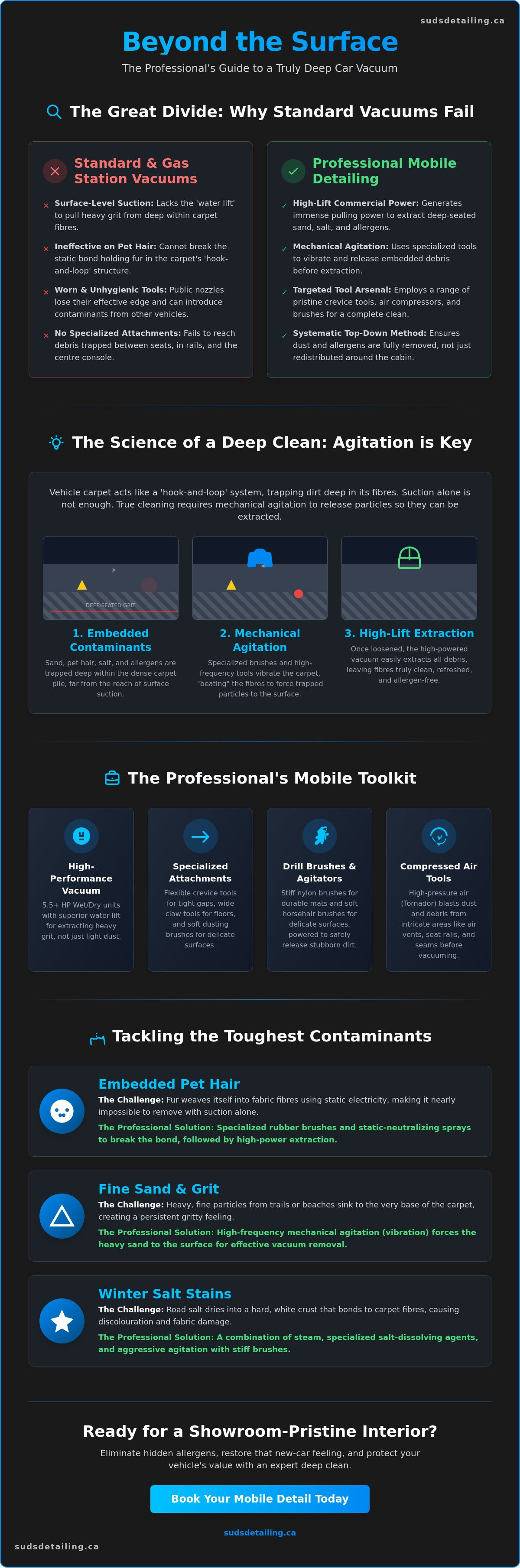
Many drivers assume a vacuum is just a vacuum. However, professional mobile car vacuuming is a rigorous multi-stage extraction and agitation process that goes far beyond surface-level suction. While a household upright is designed for flat, open rugs, automotive interiors present a much more complex challenge. Most vehicle carpets are manufactured with synthetic fibres that act like a "hook-and-loop" system. This structure is specifically designed for durability, but it also creates a perfect trap for grit, pet hair, and fine dust. Once these particles settle deep into the weave, simple suction cannot pull them out.
The problem isn't just what you can see. Below the surface level, car seats and floorboards house "invisible" contaminants like skin cells, pollen, and microscopic allergens that settle into the seat foam. A standard household vacuum usually lacks the static lift required to pull these particles through several layers of fabric. It also lacks the hose flexibility needed to reach the tight contours of a vehicle's cabin. This is why a comprehensive auto detailing session is essential for a truly healthy interior environment. Professionals use equipment that generates higher water lift, a technical measurement of a vacuum's ability to pull heavy debris out of deep fibres.
The Science of Carpet Agitation
True cleanliness requires mechanical intervention. Vibration is the key to releasing dirt particles trapped between tightly woven synthetic fibres. Professionals use specialized tools to "beat" the carpet at a high frequency; this causes the sand and grit to jump to the surface where the vacuum can finally capture them. This mechanical release is a cornerstone of professional mobile car vacuuming. Suction-only methods simply glide over the top. It's also vital to avoid aggressive scrubbing with a hard vacuum head. This can fray delicate interior fabrics and create "fuzzing" that permanently ages the cabin's appearance. Using a soft-bristle brush in tandem with suction is the safest way to realize a factory-fresh finish.
The Limitations of Gas Station Vacuums
Public, high-volume vacuums are often the first choice for a quick tidy-up, yet they come with significant drawbacks. Hygiene is a major concern. Those nozzles have touched everything from spilled milk to muddy boots in hundreds of other cars. Over time, the plastic tips on these commercial units wear down. This wear causes them to lose the sharp edge and airtight seal required for deep extraction. They also rarely provide the specialized crevice tools needed to reach "the gap" between seats and the centre console, where most debris actually lives. Relying on these tools often leaves the most stubborn dirt exactly where it started.
The Professional Mobile Toolkit: Essential Gear for a Deep Clean
Achieving a factory-clean finish requires more than just a standard shop vacuum. True professional mobile car vacuuming relies on a specific balance between Cubic Feet per Minute (CFM) and water lift. While many consumer models boast high horsepower, they often lack the water lift, or the raw pulling power, needed to extract heavy grit from deep within the carpet pile. Professional-grade units, such as high-performance 5.5 HP wet/dry vacuums, are engineered to maintain consistent suction even when the hose is restricted by tight crevices or thick upholstery.
Specialized attachments are the next pillar of the professional toolkit. A wide claw tool allows for efficient passes on large floor areas, whereas a flexible crevice nozzle is non-negotiable for reaching the debris trapped between the seat bolsters and the centre console. Many pros also use compressed air tools, often called tornadors, to blow dust out of seat rails and vents before the vacuuming even begins. To assist this process, chemical pre-treatments are frequently applied to neutralize static electricity. This breaks the bond between pet hair and fabric, making it significantly easier to lift than using everyday cleaning supplies alone.
Brush Selection for Different Surfaces
Precision detailing requires a variety of brushes to ensure every surface is treated with the appropriate level of care. Stiff nylon brushes are ideal for durable floor mats and trunk liners, where they can effectively agitate dried mud and salt. Conversely, delicate areas like leather seats or dashboard vents require soft-bristle brushes made of horsehair or boar-hair to prevent scratching. Organizing these tools in a methodical mobile workflow ensures that no surface is overlooked during the process. If you find the complexity of these tools daunting, opting for a Full Interior Package can provide the professional results you desire without the investment in specialized gear.
Mobile Power and Filtration Systems
The environment of a mobile service demands high standards for air quality and power consistency. High-efficiency particulate air (HEPA) filtration is critical in professional mobile car vacuuming because it prevents fine dust and allergens from being exhausted back into the vehicle's cabin. Without proper filtration, a vacuum can actually worsen the air quality inside your car. Professionals also utilize independent power sources or high-torque motors to ensure the suction remains steady throughout the entire session. By directing the vacuum exhaust away from the vehicle, technicians ensure that no external dust is kicked up onto the freshly cleaned surfaces.
Step-by-Step: The Professional Mobile Vacuuming Method
A pristine interior isn't the result of luck; it's the outcome of a disciplined, five-stage sequence. Professional mobile car vacuuming begins with a thorough de-cluttering and dry-brushing phase. By using a stiff-bristle brush to agitate the carpet before the vacuum even touches the surface, you release the grit that has been ground into the fibres. This preparation stage is what allows for a truly deep extraction rather than a superficial tidy-up. Once the dry dirt is loosened, the process moves into a systematic "Top-Down" approach, ensuring no debris is left behind.
After the upper surfaces are addressed, the method shifts to high-pressure air purging. This stage involves using compressed air to blow out debris from seat tracks, vents, and tight console seams. Following industry standards set by the International Detailing Association, this ensures that hidden dirt is moved to the open floor where it can be captured. The primary floor extraction then follows a strict cross-hatch pattern, vacuuming first in vertical lines and then horizontal ones to ensure 100% coverage. The final step is a meticulous inspection and carpet grooming, where a brush is used to set the fibres in a uniform direction, creating those professional "stripes" that signal a job well done.
The Top-Down Philosophy
Starting with the floor is the most common mistake made by amateurs. Gravity dictates that dust and crumbs from the dashboard, seats, and pillars will inevitably fall. By vacuuming the headliner and pillars first, you ensure that any disturbed debris is caught in the subsequent stages. When cleaning headliners, use light, sweeping motions with a soft-bristle attachment to avoid the risk of delamination or sagging. For delicate electronic displays and gauge clusters, avoid direct suction. Instead, use a clean duster brush to gently guide dust toward the vacuum nozzle held a safe distance away.
Achieving Perfection in the Footwell
The footwell is often the most neglected area of a vehicle, yet it requires the most attention. To achieve a professional result, move the front seats to their furthest forward and backward positions. This exposes the "french fry graveyards" and hidden debris that accumulate under the rails. Use a thin crevice tool to clear the "death valley" area between the seat and the centre console, where coins and crumbs frequently lodge. Don't forget to vacuum the pedals and the lower steering column area, as these often harbour fine dust that can be recirculated through the cabin's air system.
Tackling the "Big Three" Dufferin Debris: Sand, Salt, and Fur
Residents in Caledon, Mono, and throughout Dufferin County face unique interior challenges that standard cleaning methods simply cannot solve. Fine sand from local hiking trails and the Niagara Escarpment is particularly invasive, settling deep into the base of the floorboards. Unlike standard household dust, this grit is heavy, sharp, and highly abrasive. Professional mobile car vacuuming addresses this by using commercial-grade suction and high-lift equipment that can pull these heavy particles from the very bottom of the carpet pile. Without this deep extraction, the sand remains trapped, slowly grinding away at the synthetic fibres every time you move your feet or shift your position in the seat.
The Physics of Pet Hair Removal
Pet hair doesn't just sit on top of the fabric; it weaves itself into the material like a needle and thread. This mechanical bond is why simple suction often fails, leaving behind a stubborn layer of fur that refuses to budge. Professionals utilize specialized rubberized raking tools or pumice stones to safely "pull" the hair to the surface. These tools create a combination of static electricity and physical friction to break the hair's grip on the upholstery. Mechanical agitation is required to release the static and physical bond of pet hair before any vacuum can effectively extract it from the upholstery.
Dealing with Ontario Winter Salt
Ontario winters present the most significant threat to your vehicle's interior longevity. Dried salt crystals are sharp and act like sandpaper on your carpet fibres every time you step into the car, leading to premature wear and thinning of the floor mats. Removing this crust is a disciplined two-step process. A thorough dry vacuum pass is the essential first step before any liquid cleaners or steam treatments are applied. If you wet the salt before vacuuming, you turn it into a brine that sinks deeper into the floorboards and becomes nearly impossible to remove. This systematic approach is a core component of a Full Interior Package, which is specifically designed to handle the restorative cleaning required after a harsh Dufferin winter.
For vehicles that have endured a long season of accumulated debris, a basic tidy-up is rarely sufficient to restore a "like-new" appearance. Restorative cleaning requires a disciplined sequence of agitation, purging, and extraction to prevent permanent fabric damage and maintain your vehicle's resale value. This meticulous care is what preserves the long-term integrity of your cabin. If your vehicle is currently struggling with embedded pet fur or stubborn salt crust, you can book a professional interior detail to restore your cabin to its original, factory-clean condition.
Maintaining Your Interior Between Professional Details
Preserving a pristine interior requires a proactive approach that begins the moment you drive away from a professional session. One of the most effective strategies is investing in high-quality, custom-fit rubber floor mats. These mats act as a primary barrier, trapping moisture and grit before they can reach the delicate carpet fibres. Additionally, keeping a dedicated soft-bristle brush in your glovebox allows for quick, on-the-go dusting of vents and console seams. By implementing a strict "No Food" policy, you eliminate the organic crumbs that inevitably lead to lingering odours or pest issues. Scheduling a regular Basic Interior maintenance session ensures that minor dust doesn't have the opportunity to become deeply embedded over time.
The Value of Regular Maintenance
Consistency is the secret to longevity. When grit and sand are allowed to sit in your carpets, they act as tiny abrasives. Every time you enter or exit the vehicle, these particles grind against the synthetic fibres, eventually causing the carpet pile to thin and fray. Frequent vacuuming prevents this "grinding" effect, preserving the structural integrity of your cabin. In the Dufferin market, where vehicles often face harsh environmental conditions, a well-maintained interior significantly increases resale value. Beyond the financial aspect, the psychological benefits are undeniable. A clean, dust-free driving environment reduces stress and creates a more focused, enjoyable experience behind the wheel. A clean cabin is a calm cabin.
When to Call the Professionals
While home maintenance is vital, household equipment has its limits. If you notice lingering smells that won't dissipate or visible grit that your shop vac simply cannot lift, it's time for a more intensive approach. Professional mobile car vacuuming utilizes specialized extraction tools and high-torque suction that consumer models cannot replicate. Suds Detailing brings this centre of excellence directly to your driveway, providing a level of meticulous care that goes far beyond a simple tidy-up. When your interior requires a deep restoration to remove hidden allergens and embedded debris, professional intervention is the most reliable path to a factory-clean result.
Ready for a deeper clean? Book your Professional Mobile Interior Detail today and experience the satisfaction of a meticulously crafted interior.
Elevate Your Driving Experience with a Pristine Interior
A truly clean vehicle is about more than just aesthetics; it's about preserving the longevity of your investment and ensuring a healthy cabin environment. You now understand that professional mobile car vacuuming relies on a disciplined sequence of mechanical agitation and high-lift extraction to remove the grit that standard vacuums leave behind. By following a systematic top-down method and addressing regional challenges like embedded pet hair or Dufferin County road salt, you can maintain a factory-fresh finish year-round.
Since 2026, we've been dedicated to bringing this level of craftsmanship directly to driveways in Grand Valley, Orangeville, and Caledon. Our service is fully mobile; we bring the power and specialized tools to you. We provide expert salt removal and pet hair extraction to ensure your vehicle receives meticulous care without the hassle of a fixed-location shop. Our goal is to exceed your expectations through disciplined work and technical proficiency.
Restore your car’s interior with Suds Detailing’s Mobile Packages
Take pride in every kilometre you drive. With the right techniques and regular care, your vehicle's interior can remain a comfortable, pristine sanctuary for years to come.
Frequently Asked Questions
How often should I have my car professionally vacuumed?
We recommend scheduling a professional session every three to six months for most daily drivers. This frequency prevents grit and abrasive sand from settling deep into the carpet fibres, where they can cause permanent wear. If you frequently transport pets or young children, a quarterly appointment ensures that allergens and organic debris are managed before they lead to lingering odours or fabric degradation.
Can professional vacuuming remove all dog hair from my car seats?
Professional techniques can remove the vast majority of embedded pet hair, even from stubborn, woven fabrics. While standard suction often fails, we utilize specialized rubberized tools and mechanical agitation to break the static bond between the fur and the upholstery. While some microscopic fibres may remain in extremely aged carpets, our process restores a clean, hair-free appearance that household equipment simply cannot achieve.
Is it safe to vacuum my car's headliner?
It is safe to vacuum a headliner provided you use a soft-bristle attachment and extremely light pressure. The headliner is a delicate component held together by thin adhesives; aggressive scrubbing or high-pressure suction can cause the fabric to sag or delaminate. We use a gentle, methodical approach to remove dust and cobwebs from this area without compromising the structural integrity of the interior roof lining.
Do you provide your own power for mobile vacuuming in Orangeville?
Our mobile unit is fully self-contained and equipped to provide its own high-torque power for all services in Orangeville and the surrounding areas. You don't need to worry about providing extension cords or access to your home's electrical outlets. This independence allows us to maintain consistent, professional-grade suction throughout the entire professional mobile car vacuuming process, ensuring a superior result right in your driveway.
What is the difference between a basic and full interior vacuum service?
A basic service is designed for maintenance, focusing on surface-level debris and easily accessible areas. In contrast, a Full Interior Package is a restorative process that includes deep agitation, high-pressure air purging of seat tracks, and meticulous crevice cleaning. While a basic vacuum keeps things tidy, the full service is essential for removing embedded sand, salt crust, and allergens that have settled deep into the cabin.
Can vacuuming alone remove the smell of smoke or old food?
Vacuuming is an essential first step in odour removal because it eliminates the physical source of the smell, such as ash or organic crumbs. However, smells that have permeated the fabric fibres usually require additional treatments like steam cleaning or enzyme applications. By removing the dry debris first, we ensure that subsequent cleaning steps are more effective, but vacuuming alone is rarely a total solution for deep-seated odours.
How long does a professional mobile vacuuming session typically take?
A session typically ranges from 45 minutes for a basic maintenance tidy-up to over two hours for a deep, restorative clean. The duration depends heavily on the vehicle's size and the level of accumulated debris, such as embedded pet hair or winter salt. We prioritize thoroughness over speed, ensuring that every crevice is addressed and the carpet is properly groomed before we consider the job complete.
Will professional vacuuming help with my seasonal allergies?
Professional mobile car vacuuming significantly reduces the presence of seasonal allergens like pollen and dust mites inside your vehicle. By using HEPA filtration and high-lift extraction, we capture microscopic particles that standard vacuums often blow back into the cabin air. This process creates a much cleaner environment, providing noticeable relief for drivers who suffer from sensitivities during the peak allergy seasons in Ontario.


Comments