Food Spill Cleanup and Interior Detailing in Caledon

A spill can look minor and still leave crumbs, a sticky patch or a lingering stain in the cabin. For food spill cleanup in a car in Caledon, remove loose food first, then clean the affected carpet or upholstery with a method suited to the material; stains treated within 24 hours often come out without a visible residual mark.
It’s understandable to wonder whether mobile detailing reaches your part of Caledon and what kind of cleaning a food spill needs. The right approach depends on where the food landed, how long it has been there and whether residue has worked into the fibres.
This guide explains how crumb removal, interior detailing and carpet or upholstery shampooing can help address food and drink spills. You’ll also learn what to consider when choosing a mobile service and how a careful interior clean can help restore a fresher cabin.
Table of Contents
Interior detailing and food-crumb removal
Food residue can spread beyond the visible spot, reaching seat seams, carpet edges and nearby hard surfaces. For food spill cleanup in a car in Caledon, prompt crumb removal and cleaning suited to the material can help address both visible marks and leftover residue.
Food Stain and Odour Removal
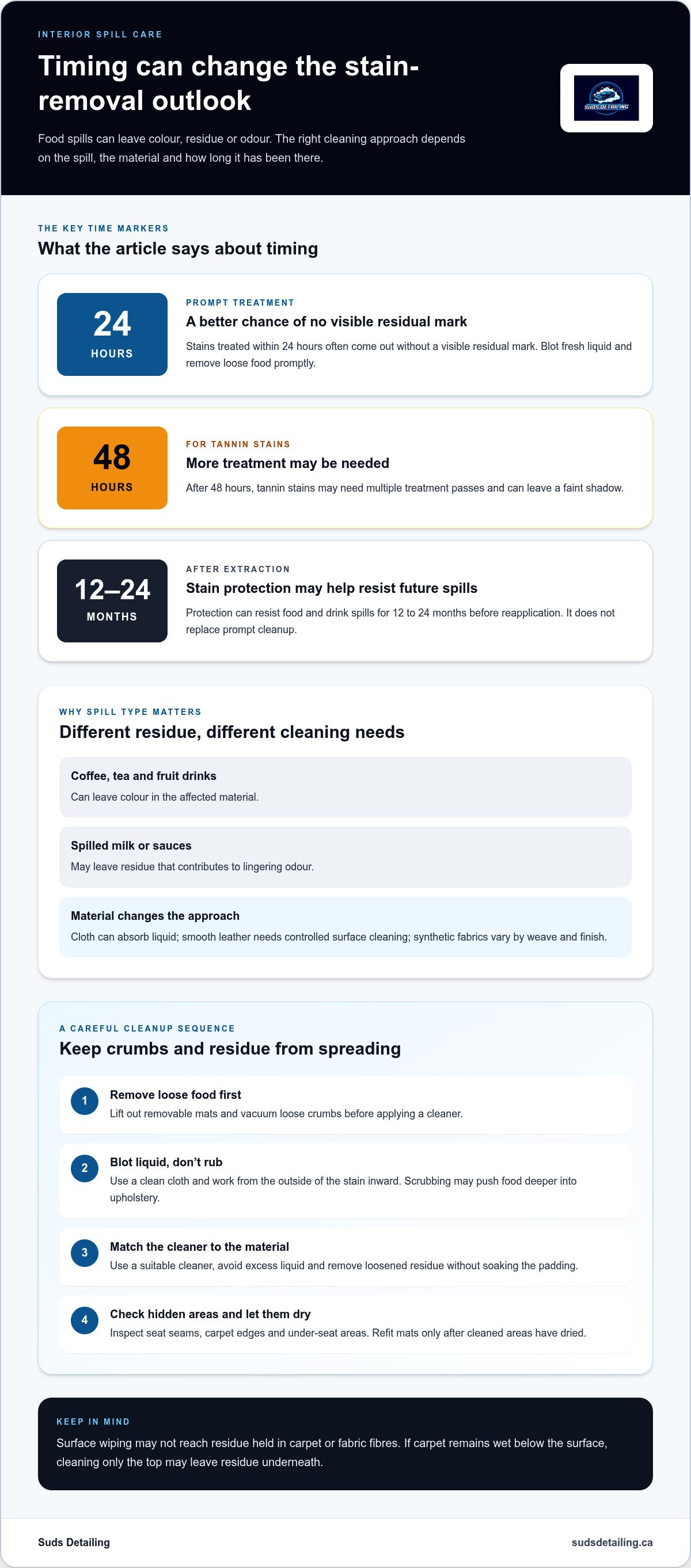
Food and drink stains treated within 24 hours often come out without a visible residual mark. After 48 hours, tannin stains may need multiple treatment passes and can leave a faint shadow. Coffee, tea and fruit drinks can leave colour, while spilled milk or sauces may leave residue that contributes to lingering odour.
Which Caledon mobile car detailers offer food spill cleanup? Look for mobile interior detailing that addresses the spill and nearby surfaces. The affected material, type of spill and time left untreated all shape the cleaning approach.
Does car insurance cover interior cleaning after a food spill? Coverage depends on your policy wording and circumstances. A spill alone doesn’t establish coverage. Review the policy terms for interior damage, exclusions and deductibles to understand how cleanup is treated.
DIY stain removal can make a mark harder to address. Scrubbing may push food deeper into upholstery, while excess water can reach carpet backing. Household cleaners may affect colour or leave soap residue. Test a suitable cleaner on a hidden area first, and blot the visible spill rather than rubbing it.
Remove loose crumbs before applying a cleaner, so particles aren’t rubbed into the fibres.
Blot liquid with a clean cloth, working from the outside of the stain inward.
Avoid adding more liquid than the material can absorb.
Cleaning Seats, Carpets, and Floor Mats
What steps remove food spills from car seats, carpet and floor mats? First, lift out removable mats and vacuum loose food. Then blot liquid, use a cleaner suited to the material, and remove remaining residue without soaking the padding.
Clean each surface according to its material. Cloth seats and carpet can hold liquid below the visible stain, while leather and other smooth surfaces need a different approach. Check seams, under-seat areas and mat edges, where snack crumbs can collect. Refit mats only after the cleaned areas have dried.
Pet hair can trap crumbs against upholstery and make a spot harder to inspect. If hair is present, remove it before treating the spill, then vacuum seams and the seat-to-backrest gap. This helps uncover food particles that could otherwise remain after the visible mess is gone.
If a needle or other sharp object is mixed with debris, don’t vacuum it or reach into a concealed gap. Keep clear of the item and point out its location before cleaning begins. A visible hazard needs separate attention from ordinary crumb and stain removal.
Separate removable mats from the carpet before cleaning either surface.
Inspect seat seams and carpet edges for hidden crumbs or residue.
Use a measured amount of cleaner suited to the material, then remove loosened residue.
Carpet and upholstery shampooing
Shampooing targets food residue held in carpet and fabric fibres, beyond what surface wiping can remove. The suitable treatment depends on the upholstery material, the spill and how far the liquid has travelled.
Vacuuming Carpets and Upholstery
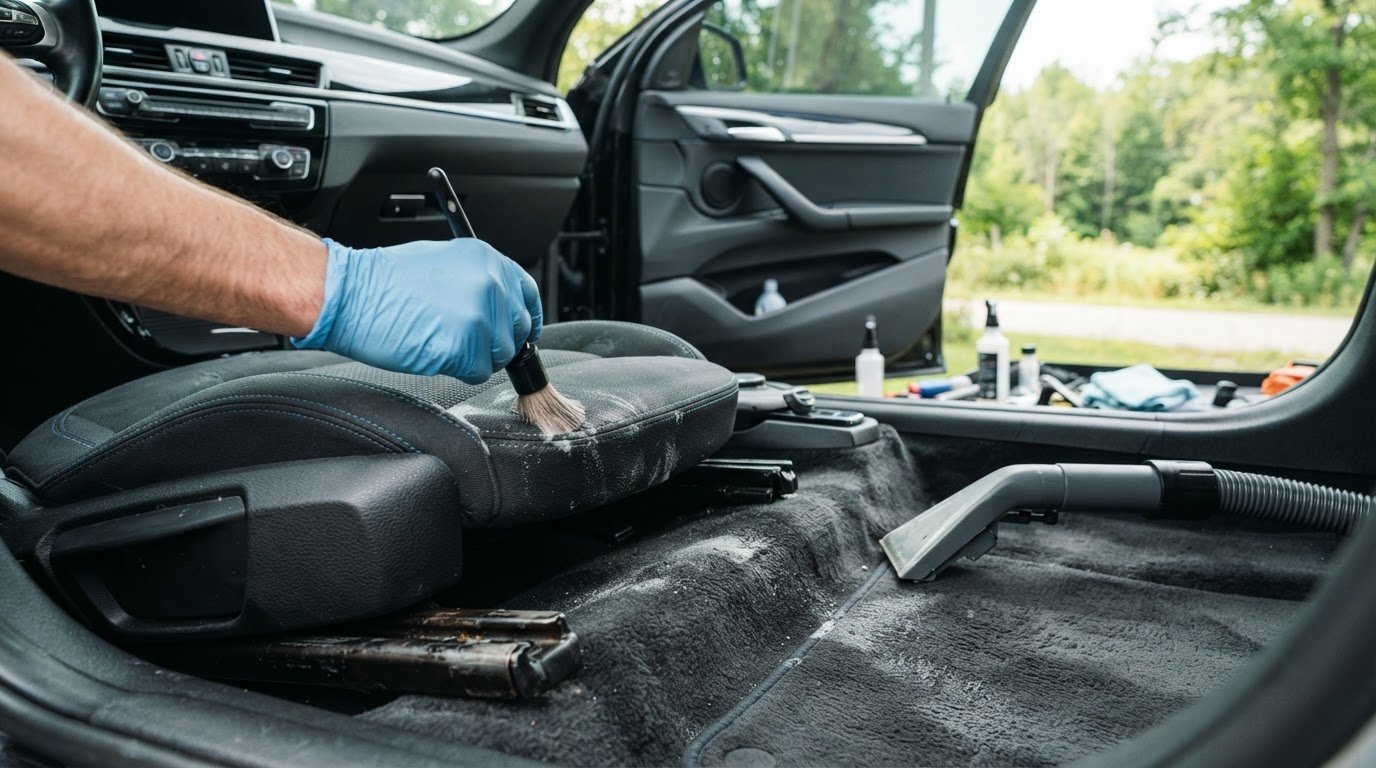
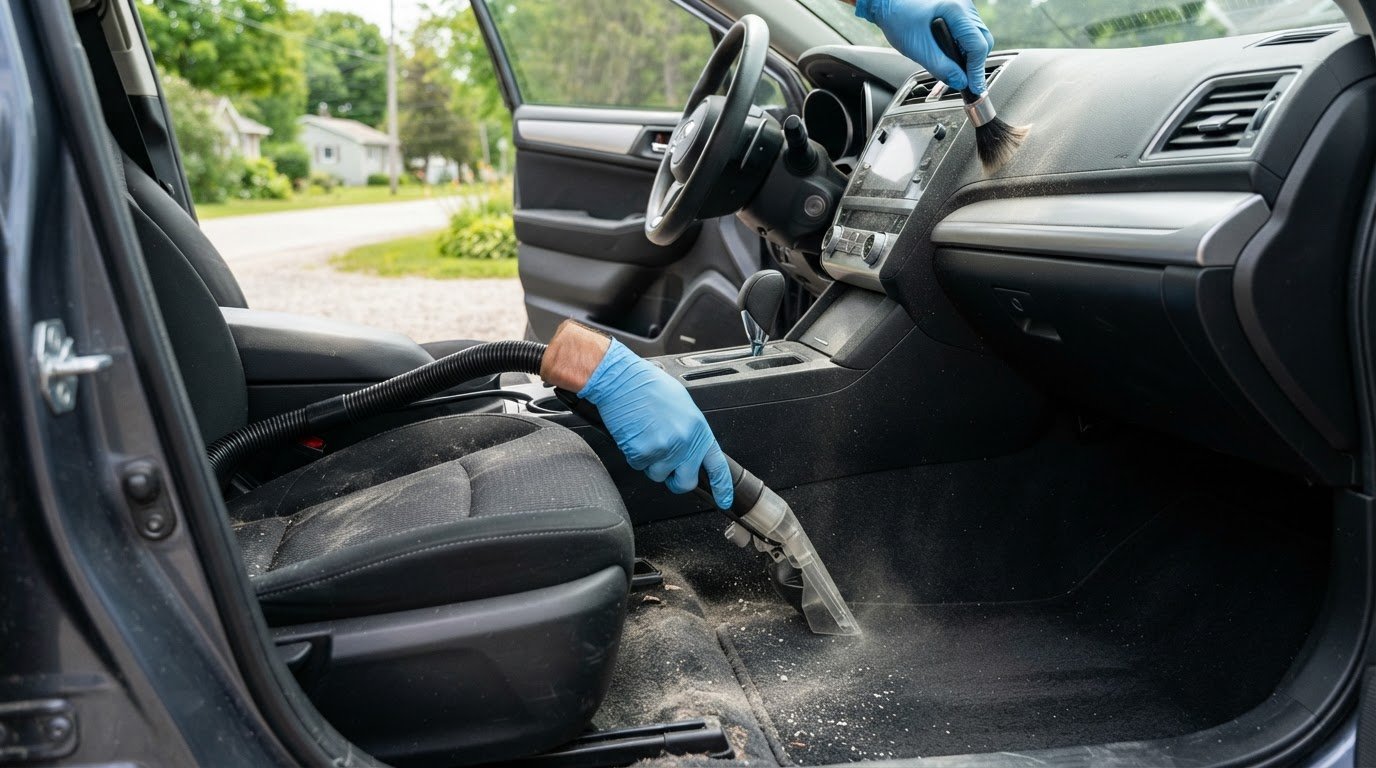
Start with a dry vacuum before applying liquid treatment. Remove floor mats and vacuum both sides, then work along carpet edges, seat seams and the gaps beside the centre console. A narrow attachment can lift crumbs from creases without pushing them deeper. Check the area under good light, since visible particles can interfere with stain treatment.
For seats, vacuum seams and folds before cleaning the main panels. This separates dry debris from sticky residue and helps reveal the actual spill area.
Carpet and Upholstery Treatment
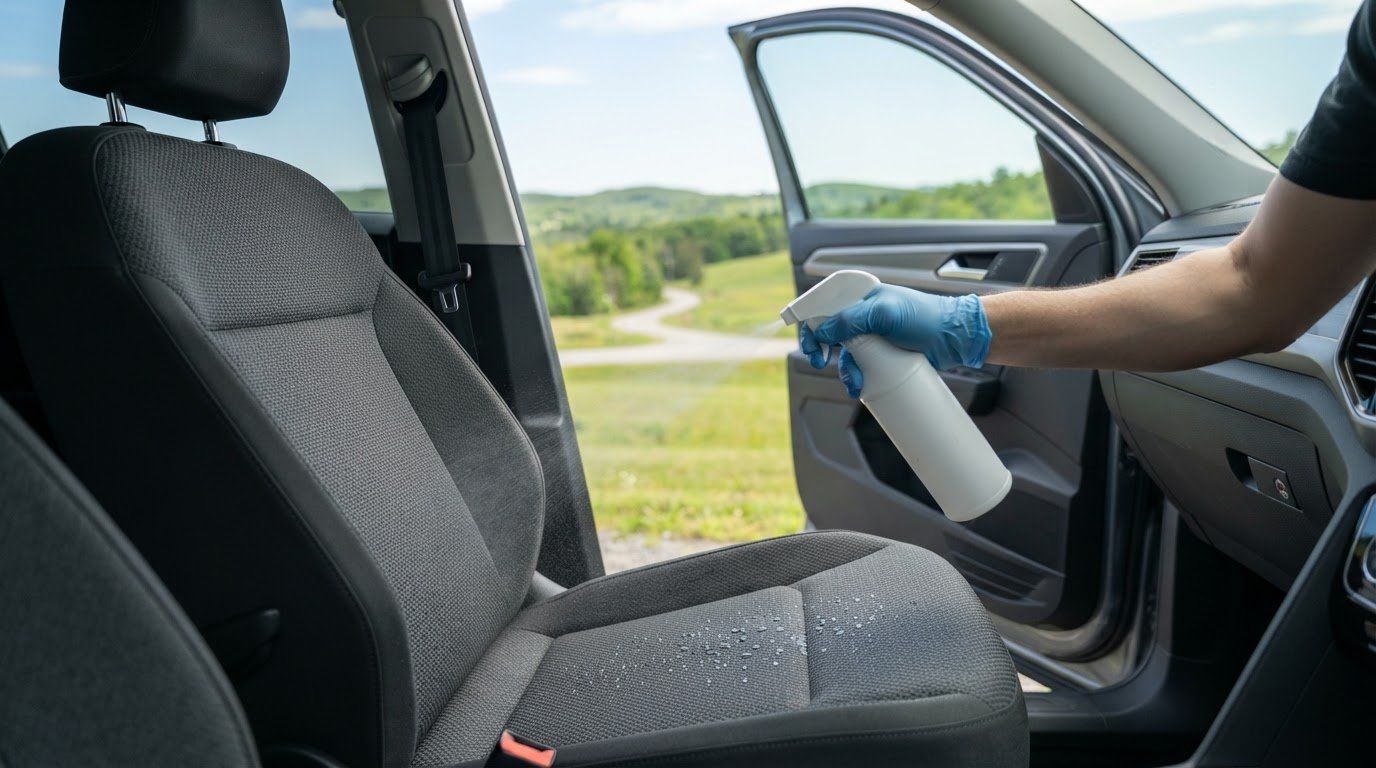
Apply a fabric-appropriate cleaner as directed, avoiding excessive moisture. Work gently from the outer edge towards the centre, then remove loosened residue with a clean cloth or suitable extraction method. Cloth, leather and synthetic upholstery have different properties: cloth can absorb liquid, smooth leather needs controlled surface cleaning, and synthetic fabrics vary by weave and finish.
How do cleaning methods differ for cloth, leather and synthetic car upholstery? Cloth may need careful shampooing and extraction; leather needs a method suited to its finished surface. For synthetic materials, match the approach to their specific surface and construction.
After extraction, stain protection can resist food and drink spills for 12 to 24 months before reapplication. It helps reduce future absorption, but it doesn’t replace prompt cleanup. Inspect the treated area for leftover residue, then allow it to dry fully before replacing mats or using the seat.
Soaked Carpet Cleanup
What should you do if food or liquid has soaked beneath the car carpet? Remove loose food and blot the surface without scrubbing, then lift out removable mats and keep the area clear. If the carpet remains wet below the surface, cleaning only the top may leave residue underneath. Note where the spill spread, including nearby footwells and carpet edges.
Deep moisture needs more than a quick surface clean. Describe the spill and its location when arranging interior detailing, so the carpet and upholstery can be considered together.
Before finishing, compare the treated patch with the surrounding carpet. Check for stickiness, visible food particles or lingering dampness. These signs can help distinguish a surface clean from residue that may still be trapped in the carpet backing.
Detailing after spills and road trips
A road trip can leave more than one obvious mess. A dropped snack may scatter crumbs beneath a seat, while a drink can leave residue around a cup holder or on a floor mat. A thorough interior detail considers these separate areas, not just the largest visible mark.
Start by noting where food or liquid landed and what happened afterward. For example, say whether a coffee spill reached the carpet or stayed on a removable mat. This helps identify which surfaces need attention and where to look for hidden residue, such as seat seams, mat edges and the space beside the console.
Food and drink stains treated within 24 hours are described as responding well to a single professional visit. After a journey, check older marks separately from fresh spills. A dried stain may need more focused treatment than loose crumbs, and a sticky patch can indicate residue beyond the visible centre.
Road-trip cleanup also benefits from a cabin-wide inspection. Look under front seats for snack fragments, check rear footwells for spilled drinks, and examine storage pockets for wrappers or crumbs. These areas can be missed if cleaning stops after vacuuming the central carpet. A clear inspection list helps ensure the detail addresses the cabin’s actual condition.
Use this sequence after returning from a drive:
Remove wrappers, containers and other loose rubbish from the cabin.
Take out floor mats and inspect both sides for food residue.
Check seat seams, cup holders and footwells for crumbs or sticky spots.
Identify any stains that need targeted cleaning rather than dry vacuuming alone.
For regular upkeep, the business recommends detailing a car every 3-6 months for most drivers. A long-distance trip, frequent meals in the vehicle or repeated spills can make the cabin’s condition an important factor in deciding when to detail. The interval is a maintenance guide, not a substitute for cleaning a fresh spill promptly.
Most interior or exterior car details take about 1 to 2.5 hours. A full interior and exterior detail takes about 2 to 4 hours, depending on vehicle size and condition. Those time ranges help set expectations for different service scopes; a post-trip interior clean focuses on cabin surfaces, while a full detail includes both interior and exterior work.
Before arranging food spill cleanup in a car in Caledon, describe the spill, its location and whether it happened during a road trip. Clear details help match the cleaning process to the condition of the seats, carpet and mats.
Common food and drink spills
Different spills leave different residues, so identify the food or drink before choosing a cleaning method. Coffee, juice, yoghurt and sauces can affect different surfaces, from cloth seats to floor mats. Note what spilled, where it landed and whether crumbs or liquid remain.
Coffee and tea: These drinks can leave tannin stains on fabric. If untreated for 48 hours or more, tannin marks may need multiple treatment passes and can leave a faint residual shadow. Blot liquid first, then focus cleaning on the stained area without spreading it outward.
Milk and other protein-based foods: Spilled milk, yoghurt or an egg-based snack can leave residue in seat seams and carpet fibres. Protein stains on carpet bond more firmly with the fibre for each hour they remain untreated. Lift solids carefully, blot moisture and inspect surrounding seams for residue.
Juice and soft drinks: Sugary drinks can leave a tacky patch on a cup holder, seat or mat. Blot the liquid, clean the affected surface and check for remaining stickiness. If the spill reached a seam or carpet edge, include that area instead of treating only the centre.
Sauces and greasy foods: Ketchup, dressing and takeout sauce can leave both colour and oily residue. Remove solid pieces with a clean tool, taking care not to press them into the upholstery. Use a method suited to the material, then inspect nearby surfaces for smears from hands or packaging.
Crumbs and dry snacks: Crackers, chips and cereal often scatter beneath seats or into seat tracks. Vacuum loose pieces before using liquid cleaner. For a chocolate or soft-food smear, lift away excess first; rubbing can push residue into the weave or spread it across the seat.
Timing matters. Food and drink stains left for a week or more often need multiple treatment passes and may still leave a faint mark. A fresh spill is easier to assess before it dries, so note its location and remove loose material promptly.
Use this quick assessment before cleaning:
Identify whether the spill is liquid, oily, sticky or solid.
Check whether it reached fabric, leather, carpet or a removable mat.
Look for residue beyond the visible mark, including seams and edges.
Choose a cleaning method suited to the affected surface, not just the food.
For a mixed spill, such as a burger with sauce and a drink, treat solids and liquid separately. Remove food pieces first, then address the drink stain and sticky residue. This sequence helps avoid pressing crumbs deeper into upholstery.
Transportation and vehicle cleaning
In Caledon, mobile detailing brings vehicle cleaning to your location, which can be convenient after a food spill. The right scope depends on the cabin’s condition, where the spill landed and whether you want interior-only care or exterior cleaning too.
For a food mark, focus the cleaning plan on the affected cabin surfaces. A drink on a seat, grease on a floor mat and crumbs beneath a rear bench each need different attention. Describe the vehicle and spill location when arranging service, so the relevant areas can be considered together.
Mobile cleaning can be useful when a vehicle is difficult to take elsewhere, including a work vehicle that stays at a regular location. For fleet vehicles, consistent interior care can help keep cabins presentable across the vehicles in use. The cleaning scope should reflect actual conditions, such as recurring food debris, stained upholstery or residue around cup holders.
Time depends on vehicle size, condition and service scope. Most interior or exterior car details take about 1 to 2.5 hours. A full interior and exterior detail takes about 2 to 4 hours, depending on vehicle size and condition. These ranges help distinguish a focused cabin clean from a more comprehensive detail.
Use the vehicle’s condition to decide what areas need attention:
For a single spill, identify the seat, carpet or mat affected.
For a family vehicle, include rear footwells and seat seams in the inspection.
For a work vehicle, note food residue in regularly used seating and storage areas.
For a vehicle returning from a road trip, check the cabin for scattered crumbs and drink marks.
A regular detailing interval can also support ongoing vehicle care. The recommended interval for most drivers is every 3-6 months. Frequent meals in the vehicle, regular passenger use and repeated spills can influence when the cabin needs attention. Promptly addressing a new spill remains separate from routine maintenance.
Before booking mobile detailing in Caledon, provide practical details such as the vehicle type, the affected area and whether the spill has dried. Those specifics help define the cleaning work and distinguish an interior-focused visit from a full in-and-out detail. No dollar figure is needed to make that distinction; scope follows the areas and condition involved.
If your vehicle needs a focused cabin clean after a spill, book mobile interior detailing for a suitable next step.
Suds Detailing: Fleet Services
Suds Detailing provides Fleet Services for businesses maintaining clean vehicle interiors across their fleet. For food spills in work vehicles, interior detailing can address cabin cleaning needs, from crumbs and residue to affected seats or carpet.
For individual vehicles, choose the Basic Interior Package or Full Interior Package for interior care. The Basic In & Out Package and Full In & Out Package combine cabin care with exterior cleaning. Choose based on whether the priority is the interior spill or broader vehicle care.
When arranging service, share which surfaces are affected and whether the vehicle belongs to a fleet. Contact Suds Detailing to discuss the right detailing option for your vehicle.
Make a plan for your next clean
A food spill can be a good reason to rethink how you maintain your vehicle’s interior. If meals, passengers or work equipment regularly share the cabin, make cleanup part of a broader care routine instead of waiting for another visible mess. For food spill cleanup in a car in Caledon, match the service scope to your vehicle’s needs.
Suds Detailing offers the Basic Interior Package for cabin care, the Full In & Out Package for interior and exterior detailing, and Fleet Services for business vehicles. Choose the option that best fits the vehicle or vehicles you need cleaned.
Share the spill location and your priorities when getting in touch. Contact Suds Detailing today to discuss the right detailing option, and take a considered next step towards a cleaner, more comfortable vehicle.
Frequently Asked Questions
What car detailing services in Caledon clean food spills from seats and carpets?
Suds Detailing’s Full Interior Package includes seat steam cleaning and stain removal, plus carpet steam cleaning and stain removal. The Basic Interior Package includes vacuuming seats and carpets and cleaning interior surfaces. Mobile service is available in Grand Valley, Caledon, Orangeville, Erin, Mono, Arthur, Shelburne, Guelph, Fergus, Georgetown and Dundalk. For food spill cleanup in a car in Caledon, choose based on whether seats or carpet need stain treatment.
How quickly should food spills be cleaned from car upholstery to prevent stains and odours?
Blot a fresh spill as soon as practical, since food and drink stains treated within 24 hours often come out without a visible residual mark. Avoid rubbing, which can spread the spill across upholstery. For example, if a drink lands on a seat during a drive, use a clean cloth to absorb excess liquid when safely stopped, then arrange appropriate cleaning rather than leaving the residue to dry.
Can food spills cause mould, bacteria or lasting odours in a car?
Yes, a damp food spill can leave moisture and organic residue in upholstery or carpet, where musty odours and microbial growth may develop. A sour smell after spilled milk, or a damp patch beneath a floor mat, suggests residue may extend beyond the surface. Remove the source and dry the area thoroughly; persistent dampness or odour calls for deeper interior cleaning.
When should a professional car detailer handle a food spill instead of DIY cleaning?
Choose professional detailing when a spill has soaked into carpet, spread through seat seams, dried into a visible stain or left an odour after careful surface cleaning. DIY blotting can handle loose crumbs and a small fresh spill, but excessive water or unsuitable household cleaner may complicate treatment. For example, a large smoothie spill across a cloth seat and footwell needs a more thorough approach than wiping a cleanable floor mat.
Comments