Mobile Fabric Protection for Car Seats in Mono, Ontario

Spills don’t have to leave a lasting mark on your car seats. Mobile fabric protection for car seats in Mono helps repel liquids and stains by creating a barrier in the fabric, and treated upholstery should dry overnight at about 21°C and 50% humidity. Before protection is applied, cleaned seats need to air-dry completely with good ventilation.
It’s understandable to want a straightforward answer about how the process works and when your vehicle will be ready to use. The right preparation matters: seats should be clean before treatment, and the protectant needs time to dry and cure.
This guide explains how fabric protection may help with spills, why even application matters and what affects drying. You’ll also learn the practical steps, from preparing upholstery to waiting before using the seats, so you can decide what’s right for your vehicle in Mono.
Table of Contents
Ventilation and drying after protectant application
For drivers in Mono, mobile fabric protection for car seats can involve cleaning the upholstery, applying a fabric-compatible protectant and allowing the seats to dry. The service may be carried out where the vehicle is parked, with the process centred on the condition and material of the interior. Ask about fabric protection as part of an interior-care appointment, especially when seats need cleaning before treatment.
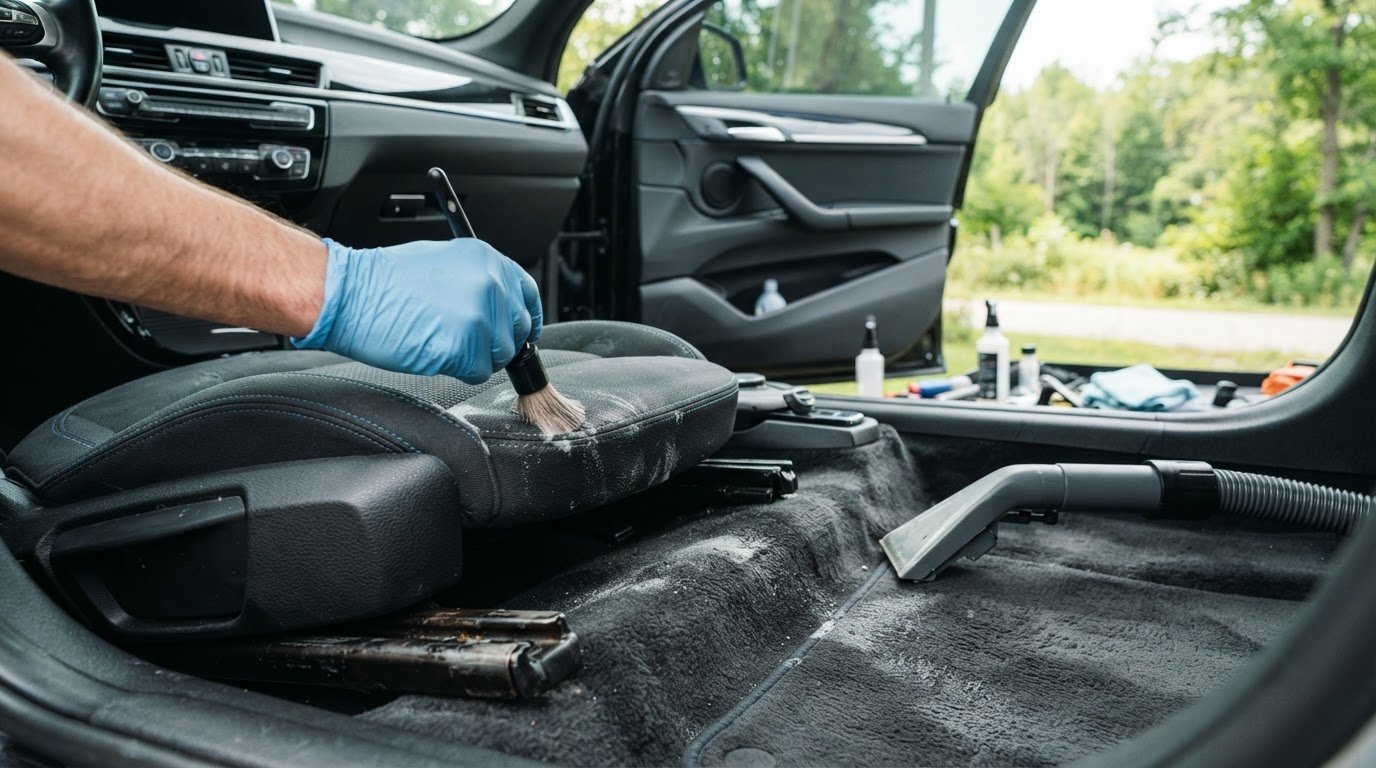
Preparation starts with a thorough vacuum. Remove crumbs, dust and loose debris from seat seams, cushions and gaps. Clean existing dirt, stains and residue before applying a protector; otherwise, it may coat the soiling rather than address it. If you use a cleaning solution, wipe away residue with a clean, damp microfiber cloth, rinsing the cloth frequently. Then let the upholstery air-dry completely in a well-ventilated space.
Fabric protectants are designed to penetrate fibres and help form a barrier against spills and stains. Formulas differ, so follow the product label for fabric suitability and application directions. Don’t assume a product made for another surface is suitable for car seats. A fabric protectant may make some spills easier to clean, but it won’t remove existing stains or make upholstery spill-proof.
Even coverage comes from controlled application, not soaking the material. Follow the product’s directions for spray distance, applying a light, consistent coat to one section at a time. Use steady passes over the centre, bolsters and other exposed areas, keeping the spray moving to avoid wet patches. Check seams and seat edges for missed areas, then follow the label before applying another coat. No single spray distance or coat count suits every product and fabric.
Ventilation matters both before and after treatment. Keep doors or windows open where conditions allow, and avoid using the seats while the protectant dries and cures. At about 21°C and 50% humidity, treated car fabric and upholstery should dry overnight. Cooler conditions, higher humidity and limited airflow can slow drying, so the actual drying period depends on the environment and product directions.
Keep children and pets away from treated seats until the fabric is fully dry, and follow the product label for any additional precautions. Regular use and later cleaning can gradually reduce protection. There’s no universal reapplication interval, so inspect the seats after cleaning or repeated spills and follow the product’s maintenance directions. Fabric protection may help repel dirt and grime, but prompt blotting with a clean, absorbent microfiber towel is still important.
Drying time between coats and before use
Plan for two drying stages: the wait between coats and the final wait before using the seats. Follow the protectant label to find out whether another coat is appropriate and when to apply it. Don’t apply a second layer while the upholstery is still wet from the first. Applying too soon can cause uneven coverage or extend drying time.
For a practical reference, treated car fabric and upholstery should dry overnight at about 21°C and 50% humidity. This is a useful planning benchmark, not a universal timer for every vehicle. Temperature, humidity and airflow all affect how quickly moisture leaves the fabric. A cool, damp day in Mono or a closed, poorly ventilated cabin can slow drying compared with a warm, airy space.
Use the product directions to determine the interval between coats. If the label calls for another coat, apply it only after the stated wait and as directed. Don’t add layers just to shorten the process or assume more product means stronger protection. Heavy application can leave damp areas that take longer to dry. Apply each coat carefully and allow the required drying time before continuing.
After the final coat, leave the seats unused while the protectant dries and cures. Keep the vehicle ventilated where conditions allow, and avoid placing bags, child seats or other items on damp upholstery. Pressure and contact can disturb a fresh application, while trapped moisture may slow drying. Check seat surfaces and seams for lingering dampness, but use the product directions as the guide for when the seats are ready.
Build the drying wait into your schedule before a commute, school run or workday. If you need to use the vehicle sooner, don’t rely on a dry-feeling surface instead of following the stated drying instructions. An interior detailing appointment can also help you plan for upholstery preparation and drying. Once the seats are fully dry, return them to regular use and follow the product label for ongoing care.
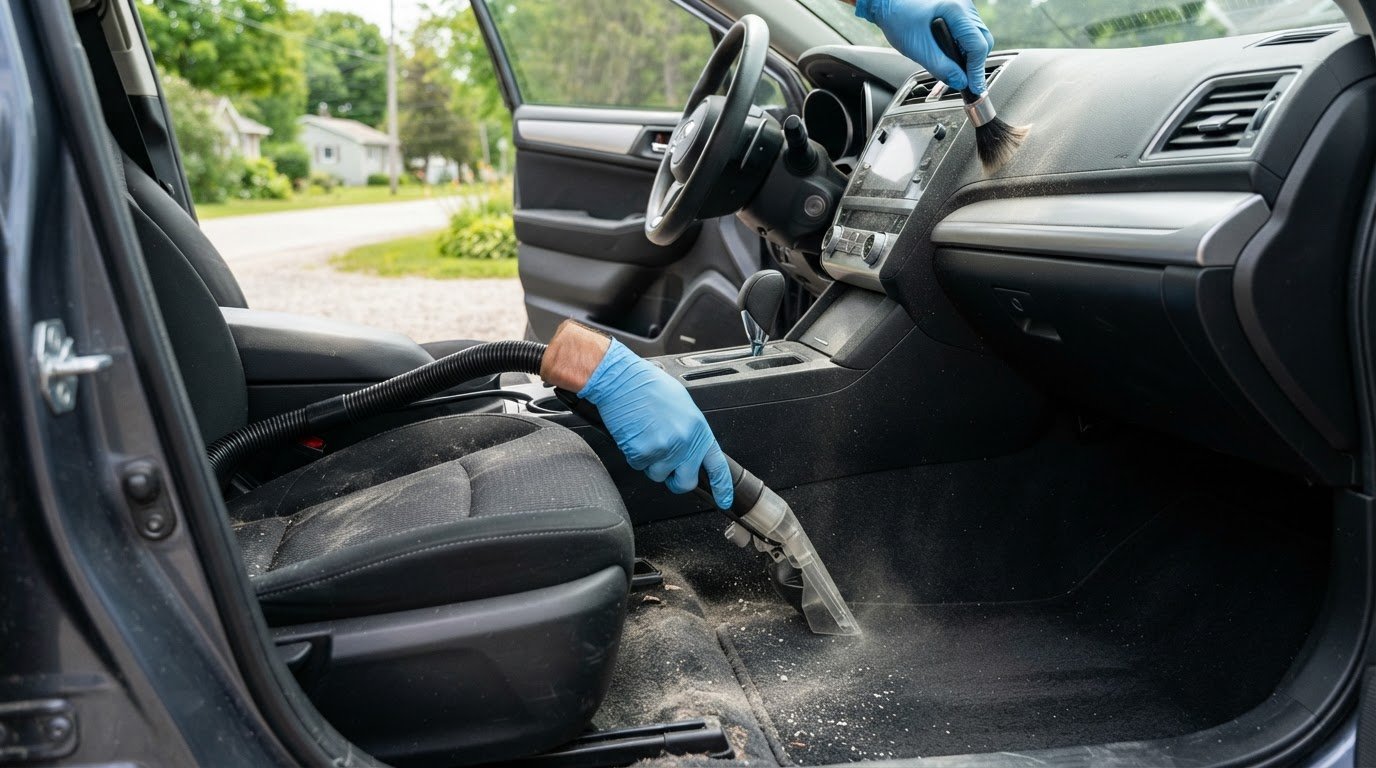
Treat preparation, coating and return to use as separate stages. Before cleaning, vacuum loose dirt, dust, crumbs and debris from the seats, carpets, floor mats and door panels. Follow the protectant’s directions instead of trying to fit drying into an arbitrary schedule. Decide when the vehicle can remain unused, allowing for the interval between coats if another is directed, as well as the final drying period. This ties the next step to the label and the upholstery’s condition, not a planned departure time.
While the seats dry, don’t treat a dry-looking patch as permission to disregard the product instructions. Check areas that may remain damp, including seams, and allow more time if needed. Keep the cabin ventilated when conditions allow, and leave the seats uncovered and clear. If your schedule changes, adjust when you use the vehicle rather than rushing a coat or shortening the stated wait. Once the directions are satisfied and the upholstery is fully dry, the seats can return to regular use.
Repelling stains and spills
A fabric protector penetrates the seat fibres to help repel spills and stains. It’s intended to maintain the fabric’s natural look and feel, rather than create a visible covering. For example, a drink spilled on a treated seat may be easier to clean before it soaks in. The barrier may limit absorption, but it can’t prevent every mark.
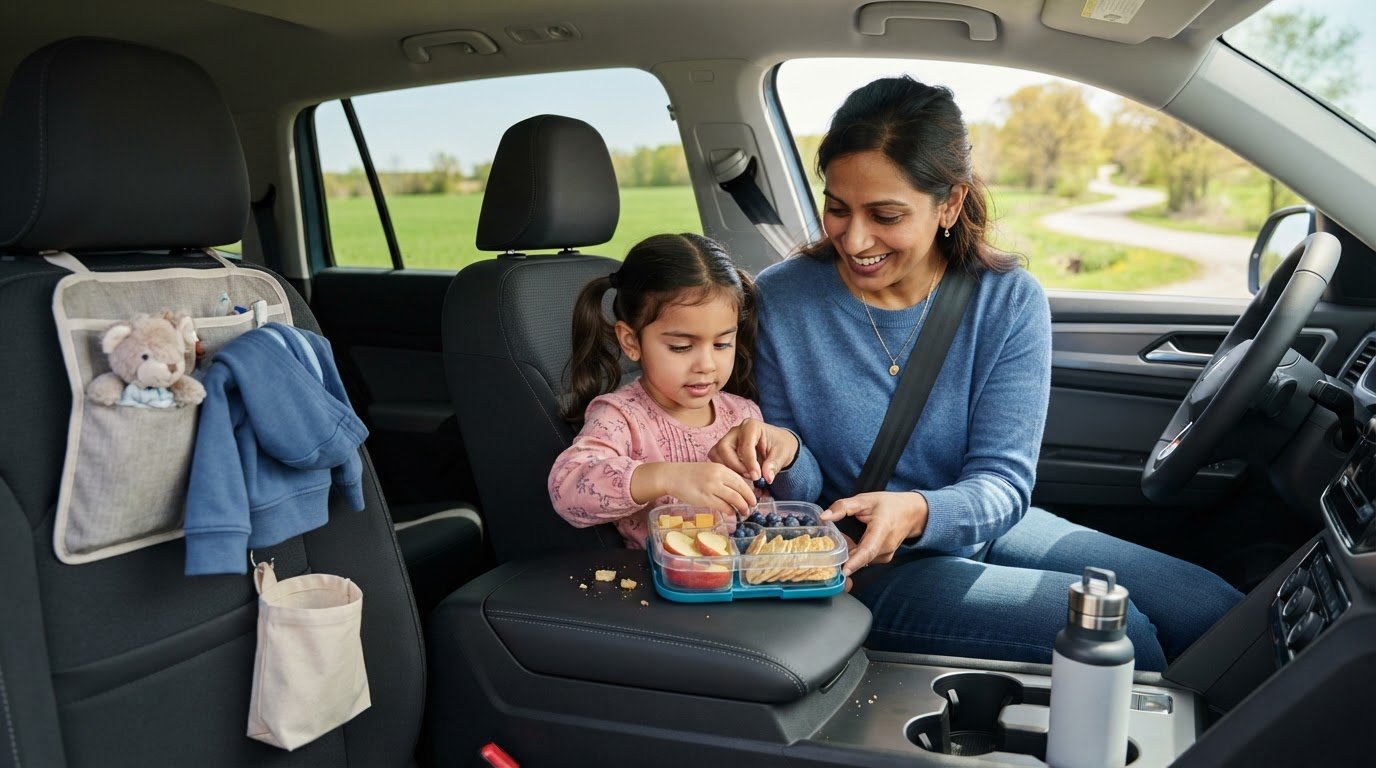
That distinction matters when using a vehicle for school runs, commuting or weekend trips around Mono. A tipped water bottle or a small coffee spill may be easier to clean if you act promptly. Protection may help limit liquid and stain penetration, but results depend on the spill, fabric and how quickly you respond.
Start with a clean, absorbent microfiber towel. Press it against a fresh spill to lift the liquid, then use a dry section of the towel as it absorbs. Avoid rubbing, which can spread the spill or push it deeper into the fibres. For a small juice spill, blot from the outside toward the centre to help contain it.
After blotting, remove any remaining loosened dirt or cleaning solution with a clean, damp microfiber cloth. Rinse the cloth frequently to avoid transferring residue back onto the seat. Use gentle passes instead of scrubbing aggressively. If a mark remains, don’t add an untested cleaner, as it may affect the fabric or its colour.
Protection may also help repel dirt and grime, supporting a cleaner appearance between interior cleanings. It won’t remove accumulated soil, food residue or an old stain that has set into the upholstery. Clean those issues before applying a protector. Treat protection as one part of routine seat care, alongside prompt spill response and appropriate cleaning.
Consider snack crumbs or muddy marks after a walk: a treated surface may make some residue easier to clean, but it still needs care. Blot liquids, gently lift solid debris and follow suitable cleaning instructions for the seat fabric. Don’t assume every stain will disappear or that one application will prevent all future staining. Timely, careful cleaning helps preserve the seat’s appearance while the protective barrier works.
A protector penetrates car-seat fibres, creating a barrier within the fabric to help repel spills and stains. Its purpose is to support the seat material without changing its natural look and feel. This protects the upholstery rather than covering it visibly. The barrier may help limit marks from spills, but it’s an aid to care, not a guarantee against every stain.
Applying a fabric protectant evenly
Even coverage starts with preparation, not the spray bottle. Vacuum seat cushions, seams and creases so loose grit doesn’t interfere with application. Clean existing stains and residue, then let the upholstery dry completely. Before treating a visible area, test the cleaner on a small, hidden spot. After a few minutes, check for colour changes or an adverse reaction.
Read the fabric protectant’s label before opening or applying it. Product directions determine suitable fabrics, spray distance, coverage and whether another coat is appropriate. There isn’t one spray distance that suits every formula. Holding the nozzle too close can concentrate product on one patch; spraying too far away can make it harder to control where the product lands.
Work methodically, one section at a time. For example, divide a front seat into the cushion, backrest and bolsters. Keep the spray moving in steady passes at the distance stated on the product label. Overlap passes slightly if directed, rather than leaving gaps or repeatedly wetting the same area. Pay attention to the seat’s shape, as raised bolsters and recessed seams can be missed in a quick pass.
Check the label: Confirm that the product is intended for the seat fabric and follow its application instructions.
Set up the seat: Move loose items and position the seat to expose its cushion and backrest.
Apply in sections: Use controlled passes, keeping the nozzle moving at the instructed distance.
Inspect the coverage: Look across the surface for missed areas or visibly saturated patches.
A consistent finish requires restraint. Don’t assume extra product improves protection; too much can leave uneven damp areas. Treat seams and edges carefully, where the fabric folds and changes direction. Follow the directions for any second coat, including the waiting interval. Let each required layer dry as instructed before continuing.
Allow ventilation after application and keep the seats clear while the protectant dries and cures. Avoid leaning on a treated cushion or placing bags on it during this stage. At about 21°C and 50% humidity, treated upholstery should dry overnight. Cooler temperatures, higher humidity and limited airflow can lengthen drying. Use the product label’s directions to guide the final wait before using the seats.
Mobile fabric protection for car seats in Mono
For Mono drivers, mobile fabric protection for car seats means having the upholstery treated where the vehicle is parked. Compare providers by service area, the seat materials they cover and the process they describe. A cloth-seat treatment should address fabric upholstery rather than assume every interior surface uses the same product. Look for clear preparation, application, drying and aftercare information before arranging service.
Compare fabric protectants by checking their stated suitability and application directions, as well as any written warranty terms. Review what a warranty covers, its conditions and how claims are handled. A product name or broad protection claim doesn’t explain those terms. Seat condition matters, too: address dirt, stains and residue before treatment. If cleaning is needed, test the cleaner on a small, inconspicuous area and check for colour changes or an adverse reaction after a few minutes.
The cost of mobile upholstery protection depends on the vehicle, seat condition, cleaning required and coverage requested. Ask for a quote that clearly states which cleaning and treatment steps are included. For example, heavily soiled upholstery may need more preparation than already-clean seats. Compare the service scope with the quote so you know what the price covers.
In Mono, look for mobile detailing providers that serve the area and explicitly describe fabric-seat protection. Compare their stated fabric coverage, preparation, application process and drying instructions. A general description of interior cleaning doesn’t tell you whether protection is included. Consider which seats get the most use, such as a frequently occupied front passenger seat or rear seats used by children.
A sound process includes cleaning seats before treatment and applying the product according to its directions. A fabric protectant may help make spills and dirt easier to manage on seat fabric. It doesn’t replace routine cleaning. After treatment, follow the product’s care instructions. For a fresh spill, blot promptly with a clean, absorbent towel rather than rubbing the fabric.
For Mono vehicle owners, the practical takeaway is to compare the work, not just the word “protection.” Match the service to your fabric seats, review preparation and coverage, and read any written warranty terms. A clear process description helps you plan for the appointment and care for the upholstery afterwards.
Suds Detailing: Fleet Services
Suds Detailing offers Fleet Services for businesses caring for multiple vehicles. For individual vehicle interiors, the Basic Interior Package and Full Interior Package provide options for cabin care. Both include steam cleaning, vacuuming and interior glass cleaning; the Full Interior Package also includes seat and carpet steam cleaning with stain removal, plus vinyl protectant and leather treatment and protectant.
Choose the package that best matches your vehicle’s interior-care needs, or consider Fleet Services for a business fleet. Keeping seats clean supports a well-maintained cabin, while fabric protection remains a separate consideration from routine cleaning. For service details, contact Suds Detailing and describe the vehicles and interior-care needs you have in mind.
Plan your next interior-care step
Choosing mobile fabric protection for car seats in Mono is an opportunity to plan care around how you use your vehicle. Consider who rides in it, how often the seats face everyday messes and whether the cabin needs broader attention alongside upholstery care. Setting clear priorities helps you choose a suitable next step without treating protection as a substitute for regular cleaning.
Suds Detailing offers Fleet Services, the Basic Interior Package and the Full In & Out Package. These options suit different needs, from maintaining a business fleet to refreshing a vehicle’s cabin and exterior together. Consider your vehicle’s condition and the type of care you want before choosing.
For a thoughtful next step, contact Suds Detailing to book and discuss the service that fits your vehicle. A well-planned approach can make it easier to keep your cabin comfortable and ready for the road ahead.
Frequently Asked Questions
How long does fabric protection take to apply, and how long must seats dry?
Application time depends on seat condition, cleaning needs, coverage and the product’s directions. Once applied, the protectant needs time to dry and cure before anyone uses the seats. At about 21°C and 50% humidity, treated upholstery should dry overnight. Cooler temperatures, higher humidity or limited airflow can extend the wait, so plan around the product label and the conditions inside the vehicle.
Is professional fabric protection safe for children, pets, and people with sensitivities?
Follow the protectant label during application and keep children and pets away until the seats are fully dry. Product ingredients and directions differ, so people with sensitivities should review the label before treatment. Ventilate the vehicle as directed, and don’t sit on damp upholstery. These practical precautions account for differences between products.
How should car seats be cleaned and prepared before fabric protection?
Begin by removing loose items, then vacuum crumbs and dust from seat seams, creases and gaps. Clean existing marks and residue before treatment; a protector isn’t a substitute for cleaning. For example, crumbs beside a seat bolster can be missed in a quick surface vacuum, so check the edges closely. Wipe away cleaning residue with a clean, damp cloth, then let the upholstery dry completely.
What mobile car seat fabric protection services are available in Mono, Ontario?
Mobile service can include upholstery cleaning and steam cleaning, with seats left to dry where the vehicle is parked. Seats should be clean and completely dry before applying a fabric protectant.
How long does car seat fabric protection last, and when should it be reapplied?
Regular use and later cleaning can gradually reduce protection. Inspect the seats after cleaning or repeated spills and follow the product’s maintenance directions. There’s no universal reapplication interval for every vehicle.
Comments