Two-Bucket Car Wash Method: A Practical Guide to Washing Your Car Safely

What if the way you rinse your wash mitt matters as much as the soap you use? Ontario roads can leave a vehicle coated in grit, slush, and road salt. Dragging that debris across the paint may increase the chance of marks. The two bucket car wash method helps manage that risk by keeping rinse water separate from soapy wash water.
If you’re unsure which bucket does what, how often to rinse your mitt, or where to begin, you’re not alone. A careful wash doesn’t need to be complicated, but clean tools and a consistent sequence matter. This guide explains what each bucket is for, which supplies to prepare, and how to wash your vehicle in a practical order.
You’ll also learn how to adjust your routine for heavy road grime, changing weather, or a vehicle that needs more than a routine wash. The method can help reduce the chance of transferring dirt back onto the finish, but it can’t eliminate every paint-care risk. If you’d rather leave hand washing to a detailer, Suds Detailing offers mobile in-and-out detailing in communities including Grand Valley, Caledon, Orangeville, Erin, Mono, Arthur, Shelburne, Guelph, Fergus, Georgetown, and Dundalk. Check current coverage and availability before booking.
Table of Contents
What Is the Two-Bucket Car Wash Method?
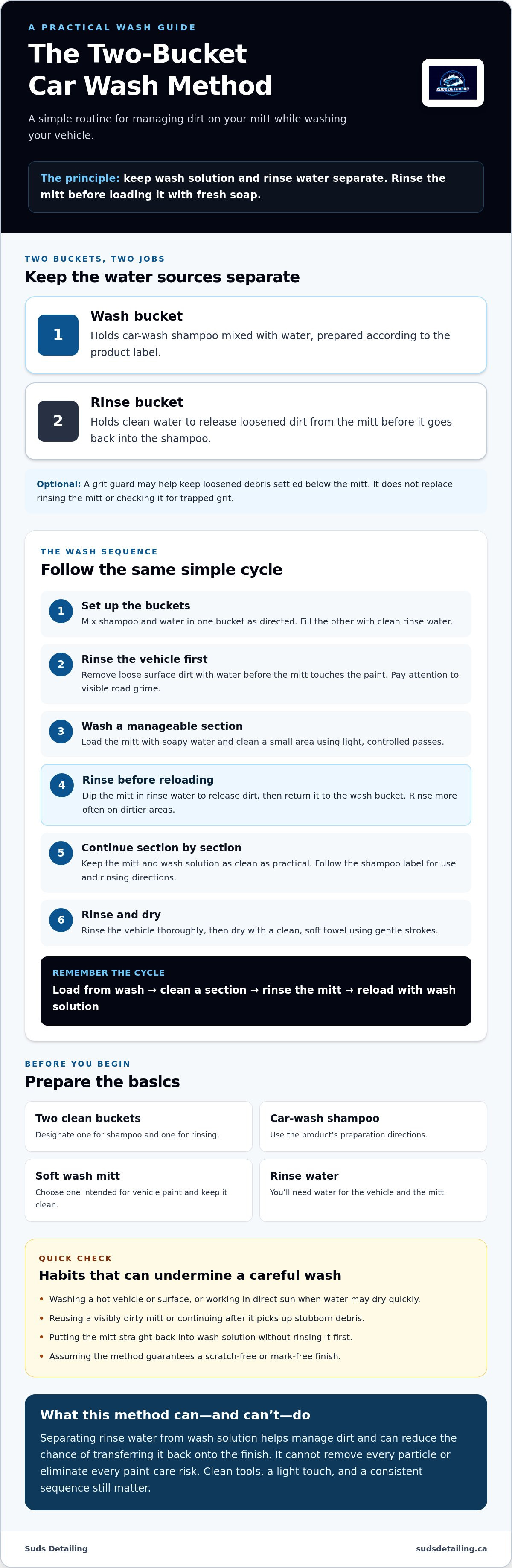
The two bucket car wash method uses one bucket for car-wash shampoo mixed with water and a second bucket of clean water for rinsing the wash mitt. After cleaning a section of the vehicle, rinse the mitt in the rinse bucket before loading it with fresh wash solution. Separating the water sources helps keep loosened dirt out of the soapy water, but it can’t guarantee a mark-free finish. The mitt’s condition, your technique, and the amount of grime on the vehicle still matter.
In brief: One bucket holds the wash solution. The other holds rinse water to remove dirt from the mitt before it goes back into the soap.
This setup suits someone washing a personal vehicle at home with basic equipment and access to rinse water. It gives the routine a simple structure: keep the two water sources separate and pay attention to the cleanliness of the tools touching the paint. Hand washing is one part of the wider practice of auto detailing, which can involve care beyond a routine exterior wash.
Why use separate wash and rinse buckets?
As a mitt lifts dust and road film from the vehicle, some of that soil stays in its fibres. Swishing the mitt in the rinse bucket before reloading it can release dirt there instead of returning it directly to the shampoo solution. This helps manage contamination, but it won’t remove every particle or prevent every scratch. Use a clean, paint-safe mitt, and stop to clean it if it becomes visibly soiled or picks up debris.
What equipment do you need before starting?
Gather the essentials before filling the buckets. Start with clean equipment, follow the care and dilution directions on product labels, and choose supplies intended for automotive finishes rather than household cleaning.
Two clean buckets: Designate one for shampoo solution and one for rinsing.
Car-wash shampoo: Follow the label instructions for preparing the wash solution.
A soft wash mitt: Choose one intended for vehicle paint and keep it clean.
Access to rinse water: You’ll need water to rinse both the vehicle and the mitt.
A grit guard that sits at the bottom of a bucket is optional, not a requirement. It may help keep loosened debris settled below the mitt, but it doesn’t replace rinsing the mitt or checking it for trapped grit. For a careful routine, begin with clean buckets and a clean mitt, then keep the two water sources separate as you wash.
How to Use the Two-Bucket Car Wash Method Step by Step
A controlled wash starts before the mitt touches the paint. Work on a cool vehicle in suitable conditions, ideally in the shade. Direct sun or a warm surface can make water dry quickly, leaving less time to rinse it away. If the weather is too hot, windy, or otherwise difficult for a careful wash, wait for more favourable conditions.
Set up the buckets. Fill one with water and car-wash shampoo mixed according to the product label. Fill the other with clean rinse water. Keep the buckets separate throughout the wash.
Rinse the vehicle first. Use water to remove loose surface dirt before bringing the mitt into contact with the paint. Pay particular attention to areas with visible road grime. This initial rinse helps clear away debris, though it won’t remove every contaminant.
Wash a manageable section. Load the mitt with soapy water and clean a small area using light, controlled passes. Smaller sections are easier to keep wet and make it simpler to check the mitt regularly.
Rinse before reloading. Dip the mitt in the rinse bucket to release loosened dirt, then return it to the wash bucket for fresh solution. Repeat after each section, and rinse more often on dirtier areas. If the mitt picks up stubborn debris, stop and clean it before continuing.
Continue in a consistent order. Work around the vehicle section by section, keeping the mitt and wash solution as clean as practical. Follow the shampoo label for use and rinsing directions rather than assuming every product works the same way.
Rinse and dry. Once washing is complete, rinse the vehicle thoroughly so shampoo doesn’t remain on the surface. Dry it with a clean, soft towel, using gentle strokes and avoiding pressure that could drag leftover dirt across the finish.
Remember the sequence: load the mitt from the wash bucket, clean a small section, rinse the mitt in the rinse bucket, then reload it with wash solution. This routine helps manage dirt, but it doesn’t guarantee a scratch-free result. Clean tools, a light touch, and suitable washing conditions all support a more careful wash.
If you’d prefer a detailer to handle the hand washing, review mobile detailing booking options.
Two-Bucket Washing Compared with One Bucket, a Foam Cannon, and Automatic Washes
Different washing options suit different routines, but each requires you to consider the vehicle’s condition and how its surface is cleaned. The two bucket car wash method separates rinse water from shampoo solution. Other approaches may reduce setup or offer a different type of wash, with their own limitations.
Is the two-bucket method better than one bucket?
A single bucket is simpler to set up and may suit someone looking for a basic routine. The trade-off is that rinse water and wash solution share the same container. Two buckets take more setup and space, but keep those water sources separate. Either way, a dirty mitt, rushed technique, or heavily soiled vehicle can undermine a careful wash. Choose a setup you can use consistently, and check the mitt more often if the vehicle is especially grimy.
Can pre-rinse, foam, or automatic washing replace it?
A thorough pre-rinse can help remove loose contamination before the mitt touches the paint. Foam can also be a preliminary step, but don’t assume it lifts every trace of road film or grit. Follow product directions, rinse as needed, and use an appropriate contact-washing method if residue remains. Foam can complement a careful wash, but it doesn’t automatically replace one.
Automatic and touchless washes use different processes, and neither is universally safest. Consider the vehicle’s condition, the wash system’s approach, and relevant vehicle-care guidance. If you wash at home, choose a method that lets you work carefully. If you use a facility, follow its instructions and your vehicle manufacturer’s guidance.
Common Two-Bucket Car Wash Mistakes and How to Avoid Them
The two bucket car wash method helps organize a careful wash, but the number of buckets alone won’t protect the finish. Use this checklist to catch habits that can make washing less controlled.
Washing a hot or dry surface: Water and shampoo can dry quickly in warm or sunny conditions. Choose a cool surface and shade where practical, and follow the shampoo label.
Skipping the initial rinse: Don’t take a mitt straight to a dusty or gritty vehicle. Rinse away loose surface dirt first to reduce the debris the mitt may pick up.
Continuing with a dirty mitt: If you see dirt or debris on the mitt, rinse it before moving to another panel. If it remains contaminated, stop and clean it before continuing.
Pressing hard or scrubbing: Use light, controlled contact rather than force. Rinse and reapply wash solution as needed instead of trying to remove stubborn grime by rubbing harder.
Choosing an unsuitable cleaner: Household cleaning products aren’t necessarily intended for automotive finishes. Check the label and use a product only if it indicates automotive use.
Bucket count matters, but clean equipment and careful contact technique matter just as much.
How can you reduce the chance of swirl marks?
Start by rinsing loose dirt away, then guide a clean mitt gently across the surface without pressing down. Check it as you work, especially after washing a visibly dirty area. Rinsing a soiled mitt before moving to another panel helps limit debris transfer, but no wash routine can promise a flawless finish. Existing marks or contamination that remains after washing may need assessment by a professional.
What should Ontario drivers do about road salt and seasonal grime?
Winter road residue can collect on paint and lower bodywork. Wash when weather and access allow, using appropriate products and following their directions. Don’t scrub stubborn residue with a dry mitt. For more seasonal preparation, review pre-winter car detailing advice as part of planning vehicle care before colder conditions arrive.
If you’d prefer a detailer to handle an in-and-out wash, book a mobile detailing service. Suds Detailing serves customers in Grand Valley, Caledon, Orangeville, Erin, Mono, Arthur, Shelburne, Guelph, Fergus, Georgetown, and Dundalk. Confirm current service coverage and availability for your location.
Home Car Wash vs. Professional Mobile Detailing
A home wash is a practical way to maintain your vehicle’s exterior if you have the time, suitable washing conditions, and supplies to clean it carefully. The two bucket car wash method can help structure that routine, but it isn’t a substitute for a broader clean when your vehicle needs attention beyond its exterior.
Which jobs suit a home wash, and which call for detailing?
Choose a home wash for routine exterior upkeep when the vehicle’s condition is manageable and you can wash it without rushing. If you’re short on time, lack a suitable place to wash, or want help with more than the exterior, professional detailing may be a better fit. Suds Detailing offers basic and full interior packages, as well as basic and full in-and-out packages. Consider what needs attention, then check the package details to decide which option suits your vehicle. A routine wash and comprehensive detailing serve different purposes, so one doesn’t automatically replace the other.
Suds Detailing’s in-and-out services include hand washing. If you have a particular washing process in mind, ask about the current procedure when enquiring.
How to arrange mobile detailing in the local service area
Mobile detailing is delivered at the customer’s preferred location, which can be useful if travelling to a detailing facility doesn’t suit your schedule. Before booking, consider what your vehicle needs and where the work would take place. Then check whether your community is within the current service area and ask about appointment availability. Customers in Grand Valley, Caledon, Orangeville, Erin, Mono, Arthur, Shelburne, Guelph, Fergus, Georgetown, and Dundalk can contact Suds Detailing to confirm coverage and scheduling.
Compare the available interior and in-and-out options, then confirm which service matches your vehicle’s needs. Suds Detailing can provide details about the current service scope before you decide.
If mobile detailing sounds like a better fit than washing at home, check booking availability for your location.
Make Your Next Wash a Careful One
The two bucket car wash method gives a home wash a clear routine: keep wash solution separate from rinse water, rinse the mitt often, and work with clean tools and a light touch. It can help manage dirt, but no bucket setup guarantees a mark-free finish. Cool conditions, an initial rinse, and shampoo intended for automotive finishes all support a more considered wash.
For routine exterior upkeep, washing at home may suit your schedule and setup. If you’d rather have help, Suds Detailing’s mobile in-and-out detailing includes hand washing at your preferred location. Ask about the current service scope and confirm availability in your community, including Grand Valley, Caledon, Orangeville, Erin, Mono, Arthur, Shelburne, Guelph, Fergus, Georgetown, or Dundalk.
Check mobile detailing availability, then choose the approach that best fits your vehicle and routine. With a little preparation and careful technique, you can give your vehicle thoughtful care at home or arrange mobile support when you need it.
Frequently Asked Questions
Does the two-bucket car wash method prevent scratches?
No washing method can guarantee paint will remain free of marks. The two bucket car wash method separates wash solution from rinse water, which can help manage dirt transfer, but the vehicle’s condition and your technique matter too. Rinse loose debris off first, use clean equipment, and avoid pressing hard with the mitt. If it becomes visibly dirty, stop and rinse or clean it before continuing.
What goes in each bucket for the two-bucket method?
Put water and car-wash shampoo in the wash bucket, following the product label. Fill the second bucket with clean water to rinse the mitt between sections. Keep the buckets separate so you’re not using rinse water as your wash solution. If the rinse water becomes heavily soiled, replace it rather than continuing to rinse the mitt in visibly dirty water.
Do I need a grit guard for a two-bucket car wash?
No, a grit guard is optional, not essential to the method. The basic routine is to use separate wash and rinse buckets and rinse the mitt between sections. If you choose to add a grit guard, make sure it fits securely and follow its instructions. It doesn’t replace clean equipment, frequent mitt rinsing, or careful washing technique.
How often should I rinse the mitt when washing a car?
Rinse the mitt after each small section and before returning it to the wash solution. The right section size depends on the vehicle and how dirty it is. On areas with heavier grime, rinse more frequently and inspect the mitt as you work. Don’t continue washing with visible debris trapped in the mitt. If it remains dirty after rinsing, clean it before using it again.
Can I use dish soap instead of car-wash shampoo?
Use a product labelled for washing vehicles and follow its directions. Household dish soap is intended for a different purpose and may not suit your vehicle’s finish or existing protective products. If you’re unsure whether a cleaner is appropriate, check the vehicle-care product instructions or ask a qualified detailing professional before applying it. Don’t assume a household cleaner is suitable just because it removes grease.
Should I use the two-bucket method to remove Ontario road salt?
The method can be part of a careful wash, but it doesn’t guarantee removal of every trace of road residue. Rinse loose material first, choose suitable automotive products, and follow their directions. Consider the weather and access to appropriate washing conditions, especially in winter. Suds Detailing offers mobile in-and-out detailing that includes hand washing at your preferred location. If you’re in Grand Valley, Caledon, Orangeville, Erin, Mono, Arthur, Shelburne, Guelph, Fergus, Georgetown, or Dundalk, check current service coverage and availability.
Comments