The Ultimate Guide to Vinyl Protectant for Your Car Interior in 2026
- Gavin lawson
- Jul 4
- 12 min read

That blinding glare reflecting off your dashboard isn't a sign of a clean car; it's a symptom of a product that's doing more harm than good. Many drivers mistakenly believe that a high-gloss shine equals protection, but the reality is that greasy residues often attract more dust and fail to address the core issue of material degradation. You've likely felt the frustration of watching your interior fade or develop fine cracks under the relentless Ontario sun, despite your best efforts to keep it tidy. It's a common struggle for those who value craftsmanship and want their vehicle to look its absolute best.
This guide will show you how to shield your cabin from UV damage and premature aging using professional-grade strategies that prioritize long-term health over temporary sparkle. By selecting the right vinyl protectant car interior formula, you can achieve a sophisticated, factory-fresh matte finish that stays cleaner for longer. We'll explore the latest 2026 product innovations, the science of UV blockers, and the specific application methods required to ensure your vehicle's surfaces remain supple and resilient. You'll learn exactly how to maintain a pristine environment that reflects the quality of your investment and your dedication to meticulous care.
Table of Contents
What is Vinyl Protectant and Why Your Car Interior Needs It
Dufferin County residents understand that a vehicle's interior is a high-stakes environment. Between the sweltering humidity of July and the bone-chilling winds of January, your cabin materials endure a relentless cycle of stress. A professional vinyl protectant car interior solution acts as a sacrificial barrier; it is designed to absorb the brunt of UV radiation and oxygen exposure so your dashboard and door panels don't have to. Without this layer of defense, the polymers in your cabin begin a slow process of chemical breakdown that eventually leads to irreversible damage.
Avoid the common mistake of choosing products based on gloss alone. A cosmetic "shiner" often relies on heavy oils or silicone that magnify heat and attract abrasive dust. In contrast, a functional UV blocker utilizes advanced polymers to neutralize radiation at the molecular level. As a core component of professional Auto detailing, protection is about more than just aesthetics; it is about preserving the structural integrity of your vehicle's most visible assets.
The Science of Vinyl Degradation
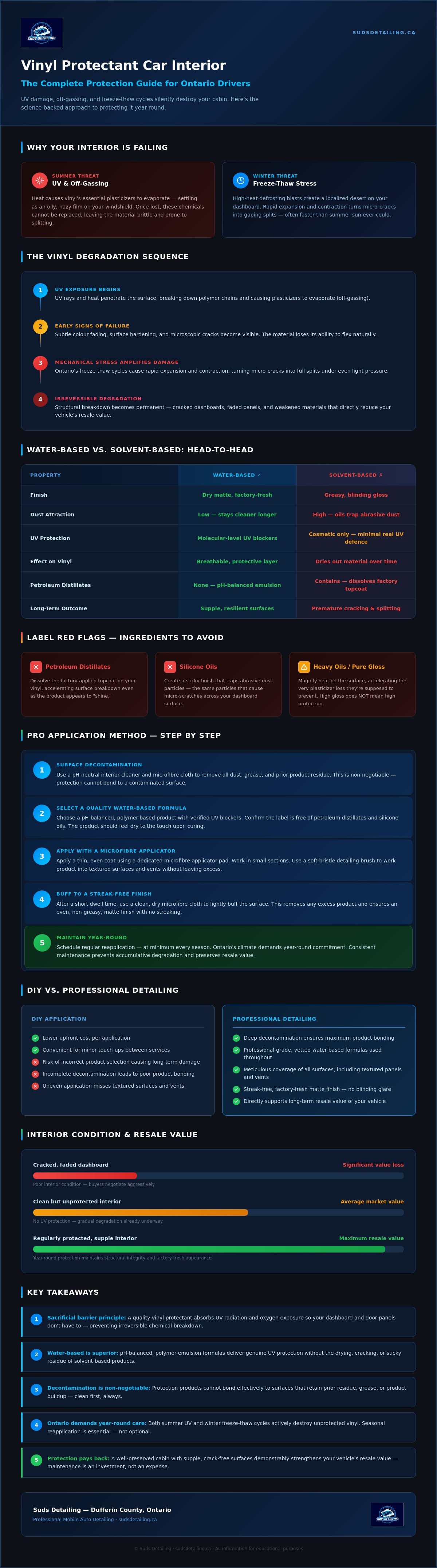
If you have ever noticed an oily, hazy film on the inside of your windshield, you have witnessed "off-gassing." This occurs when heat causes the essential chemicals within your vinyl to evaporate and settle on cooler surfaces. As these chemicals escape, you will notice early signs of failure such as subtle fading, a hardening of the surface texture, and the appearance of microscopic cracks. Plasticizers are the chemical agents that prevent vinyl from becoming brittle. Once these agents are lost to heat and UV exposure, the material loses its ability to flex, making it prone to splitting under even light pressure.
Why Ontario Winters are Secretly Killing Your Interior
While most drivers worry about the summer sun, Ontario winters present a different kind of danger. Blasting high-heat defrosting in January creates a localized desert on your dashboard, stripping moisture out of the material faster than the summer sun ever could. This extreme temperature differential, combined with the constant "freeze-thaw" cycle, causes vinyl to expand and contract rapidly. This mechanical stress is exactly what turns a small micro-crack into a gaping split. Maintaining a supple, protected interior requires a year-round commitment to hydration and UV blocking, ensuring the material remains resilient regardless of the temperature outside. For those who want to ensure their cabin receives this level of meticulous care, choosing a Full Interior Package provides the deep decontamination and high-grade protection necessary to combat our local climate.
Water-Based vs. Solvent-Based: Choosing the Right Formula
Choosing the wrong product can turn a routine cleaning into a long-term liability. In the world of car care, most products fall into two distinct categories: water-based dressings and solvent-based coatings. While both might look identical in the bottle, their chemical interaction with your dashboard is fundamentally different. Solvent-based products often rely on petroleum distillates to carry silicone oils into the material. While this creates an immediate, oily shine, these solvents can eventually dry out the vinyl and lead to premature cracking, effectively undoing the very protection you sought to provide.
Professional-grade water-based formulas offer a much safer alternative. These products are typically pH-balanced emulsions of polymers and UV blockers that sit on the surface to create a breathable, protective layer. They don't rely on harsh chemicals to penetrate the material, making them safe for everything from modern synthetic blends to traditional vinyl. When you are shopping for a vinyl protectant car interior solution, consulting resources like the Safer Chemical Ingredients List can help you identify which components are designed with safety and longevity in mind. A high-quality formula should feel dry to the touch and leave no oily residue behind.
To ensure you are selecting a product that preserves rather than destroys, use this checklist when reading labels:
Avoid Petroleum Distillates: These can dissolve the factory-applied topcoat on your vinyl.
Skip Silicone Oils: These often create a "sticky" finish that attracts dust and pollen.
Look for "UV Absorbers": Ensure the product contains active blockers, not just gloss enhancers.
Prioritize Water-Based: These formulas are generally non-flammable and more environmentally conscious.
The Danger of High-Gloss Solvent Sprays
High-gloss sprays are often marketed as the "premium" choice, but they carry hidden risks. The heavy solvents used in these formulas can strip away the delicate factory-applied protective layer that manufacturers use to prevent fading. Once this layer is gone, the vinyl becomes highly vulnerable. Additionally, high-gloss finishes create a "magnifying glass" effect, concentrating heat from direct sunlight onto the dashboard. This doesn't just damage the material; it creates a dangerous safety risk by reflecting a blinding glare into the driver's eyes during peak daylight hours.
Why Professionals Prefer Matte or Satin Finishes
The "OEM look" is the gold standard in the detailing industry. This refers to the factory-fresh, satin finish that cars have when they first leave the showroom floor. Matte protectants achieve this look while providing superior functionality, as they don't leave a sticky surface for dust to cling to. We exclusively utilize high-quality, water-based protectants in our Full Interior Package to ensure your cabin remains dust-free and protected without the artificial, greasy shine. If you prefer a cleaner that stays pristine longer, a water-based vinyl protectant car interior treatment is the only logical choice for maintaining a high-standard vehicle.
The Difference Between DIY Application and Professional Detailing
Many car owners reach for a single bottle that promises to clean, shine, and protect in one pass. While convenient, these "all-in-one" solutions often fall short of professional standards. A dedicated cleaner is designed to lift contaminants, while a high-quality vinyl protectant car interior formula is specifically engineered to bond with a completely bare surface. Mixing these functions results in a product that neither cleans deeply nor protects durably. When you apply a protectant over a layer of existing grime, you are essentially locking that dirt against the material, which can lead to staining and a splotchy appearance over time.
Professionals understand that the preparation stage is the most critical part of the process. We utilize high-temperature steam to gently open the micro-texture of the vinyl. This process allows cleaning agents to reach deep into the grain to remove embedded body oils, salt, and bacteria. Once the surface is decontaminated and the "pores" are open, the protectant can penetrate and cure properly. A home-applied spray might provide a temporary boost in appearance for a few weeks, but a professionally cured treatment offers months of resilience against the elements. This methodical approach ensures that the vinyl protectant car interior treatment stays effective through multiple seasons.
Common Mistakes in Home Vinyl Care
One of the most frequent errors in DIY care is over-saturation. Many enthusiasts believe that more product equals more protection, but this actually creates a sticky, dust-attracting residue that is difficult to remove. Another common pitfall is spraying product directly onto the dashboard. This leads to overspray on the windshield and electronics, which is a nuisance to clean. Finally, many people neglect the small details; door seals and weatherstripping require the same level of hydration and UV blocking as the dashboard to prevent them from drying out and leaking.
How Suds Detailing Approaches Interior Preservation
Our process begins with a meticulous multi-stage cleaning that targets salt, oils, and bacteria. We use professional-grade steam to sanitize every surface without the need for harsh, abrasive chemicals that can degrade the factory finish. This prepares the cabin for an even application of our premium, water-based protectants. We focus on achieving perfectly even coverage, ensuring there are no missed spots or splotches. To experience this level of precision, you can book our Full Interior Package, which is designed to restore and preserve your cabin to a like-new standard.
How to Apply Vinyl Protectant Like a Pro: A Step-by-Step Guide
Achieving a professional result requires more than just the right product; it requires a disciplined methodology and the correct tools. To properly treat your vinyl protectant car interior surfaces, you should gather high-quality microfibre towels, soft-bristle detailing brushes, and a premium water-based protectant. Using a dedicated applicator instead of spraying directly onto the dashboard prevents overspray from landing on your glass or electronic displays. This systematic approach ensures every inch of your cabin receives an even, protective layer that looks as good as it performs.
Follow these four essential steps to restore your interior to its factory-fresh glory:
Step 1: Deep Clean the Surface. Use a dedicated interior cleaner to remove body oils, dust, and microscopic debris. This ensures the protectant bonds to the vinyl rather than sitting on top of a layer of grime.
Step 2: Prime Your Applicator. Apply a small, pea-sized amount of protectant to a clean microfibre applicator pad. It's better to add more product as needed than to over-saturate the pad at the start.
Step 3: Work the Product In. Use circular, overlapping motions to massage the protectant into the vinyl grain. This technique ensures that the polymers reach into the micro-texture for complete UV coverage.
Step 4: The Final Buff. After the product has sat for a moment, use a clean, dry microfibre towel to gently buff the surface. This removes any excess liquid and levels the finish for a uniform appearance.
The Secret is in the Surface Preparation
The longevity of your protection depends entirely on the quality of your prep work. A pH-neutral cleaner is the best choice for pre-treatment because it effectively lifts oils without altering the chemical balance of the vinyl. For textured surfaces, use a soft-bristle brush to gently agitate the cleaner within the grain. This step is vital for removing embedded salt or skin cells that a simple wipe might miss. Always ensure the surface is completely dry before you begin the protection phase to prevent unsightly streaking or product dilution.
Achieving the Perfect Non-Greasy Finish
The second "dry buff" is what creates the professional matte look that most car enthusiasts desire. By removing the excess oils that lead to high-gloss reflections, you leave behind a clean, satin surface that feels dry to the touch. Once applied, allow the product a curing time of at least 30 minutes before touching the surface or placing items on the dashboard. This allows the UV blockers to fully stabilize and bond. For those with busy schedules who want this level of meticulous care without the DIY effort, our mobile detailing services bring this entire professional process directly to your driveway in Orangeville or Caledon.
Maintaining Your Interior Value with Suds Detailing
Regular maintenance is significantly more cost-effective than the alternative of replacing a sun-damaged dashboard or cracked door panels. When interior materials reach the point of structural failure, the repair costs can quickly escalate into the thousands, far exceeding the price of routine professional care. In the Dufferin County market, a vehicle's condition is a direct reflection of its value. A pristine, well-preserved cabin doesn't just look better; it directly impacts your resale potential. When a buyer sees a supple, matte-finished interior, they realize the vehicle has been handled with a high level of meticulous care.
Our approach to vinyl protectant car interior preservation focuses on chemical stability and long-term health. We act as your knowledgeable guide, helping you avoid the common pitfalls of DIY products that often cause more harm than good. By choosing a professional appointment, you are investing in the expertise of a perfectionist craftsman who takes immense pride in every detail. Whether you are an individual owner or a manager overseeing a commercial fleet, we provide the steady, reliable service needed to keep your assets in peak condition. We treat every vehicle with the same dedication to excellence, ensuring your cabin remains a clean, comfortable, and protected environment.
Mobile Convenience Across Dufferin and Beyond
We understand that your time is valuable, which is why we've designed our service to be as accessible as possible. Our mobile units bring professional-grade tools and techniques directly to your driveway or place of business. We proudly serve a wide region, covering areas from Shelburne to Guelph and Georgetown to Mono. This at-home service model allows you to achieve professional results without the inconvenience of a commute or the need to drop off your vehicle for the day. For local businesses looking to maintain their professional image and asset value, our Fleet Services offer a scalable, reliable solution tailored to your specific needs.
Ready to Protect Your Investment?
There is a unique sense of reassurance that comes with stepping into a professionally sanitized and protected cabin. You can feel the difference in the texture of the vinyl and enjoy the peace of mind that comes with knowing your interior is shielded from UV rays and seasonal stress. If you're ready to experience a higher standard of car care and ensure your vinyl protectant car interior treatment is applied with precision, Book your interior rejuvenation online today. If you have a friend or family member who takes pride in their vehicle, our Gift Cards are an excellent way to share the gift of a meticulously maintained car.
Secure the Longevity of Your Cabin Today
Preserving your vehicle's interior is a commitment to both aesthetics and long-term asset value. You now understand that a premium vinyl protectant car interior treatment is more than just a cosmetic upgrade; it's a vital chemical barrier against Ontario's extreme environmental shifts. By prioritizing water-based formulas and meticulous surface decontamination, you ensure that your dashboard and trim remain supple and resilient for years to come.
At Suds Detailing, we bring this level of perfectionist craftsmanship directly to your driveway. We serve Dufferin County with professional mobile detailing, providing specialized steam cleaning and UV protection packages that go far beyond a simple wipe-down. Every interior surface receives our full attention to ensure a factory-fresh, matte finish that stands the test of time. It's time to experience the reassurance of a cabin maintained by experts who take pride in the finer details.
Book Your Professional Interior Detailing Online
Take the first step toward a cleaner, better-protected cabin and enjoy the satisfaction of a job expertly done.
Frequently Asked Questions
Is vinyl protectant safe to use on my car’s leather seats?
You should generally avoid using a vinyl protectant on leather seats unless the product label explicitly states it's safe for both surfaces. Leather is a natural, porous material that requires specific conditioners to remain supple, whereas vinyl is a synthetic, non-porous plastic. Using a product designed for vinyl on leather can block the leather's ability to breathe, potentially leading to a stiff or greasy finish over time.
How often should I apply protectant to my car’s interior?
For optimal results, you should apply a vinyl protectant car interior treatment every one to three months. Vehicles that are frequently parked outdoors in direct sunlight will require more frequent applications to maintain an effective UV barrier. Regular maintenance ensures the plasticizers remain stable, preventing the material from becoming brittle during Ontario's intense seasonal temperature shifts.
Can vinyl protectant help fix a dashboard that has already started to crack?
A protectant cannot repair a dashboard that has already cracked; it's strictly a preventative measure. Once the structural integrity of the vinyl is compromised, only professional repair or replacement can fix the physical gap. However, applying a high-quality protectant to the surrounding areas can help stop existing cracks from spreading by hydrating the material and preventing further UV-induced stress.
Will using a protectant make my dashboard too shiny or cause glare?
A high-quality water-based protectant won't cause distracting glare if applied correctly. Unlike solvent-based products that leave an oily, high-gloss film, modern professional formulas are designed to provide a satin or matte finish. This restores the original factory appearance without creating the dangerous reflections on your windshield that often come from cheaper, greasy alternatives.
What is the difference between a car interior cleaner and a vinyl protectant?
A car interior cleaner is designed to lift dirt, body oils, and dust, while a protectant provides a sacrificial barrier against UV rays and oxygen. You shouldn't use a protectant as a cleaner because it'll simply lock the grime against the surface. For a truly professional result, always perform a deep clean first to ensure the protectant can bond directly to the bare vinyl.
Can I use household cleaners like Windex on my car’s vinyl surfaces?
You should never use household glass cleaners or all-purpose sprays on your car's vinyl surfaces. These products often contain ammonia or harsh detergents that strip away the factory-applied protective coatings and accelerate the drying process. Over time, this chemical exposure leads to premature fading and hardening of the material, making it much more susceptible to cracking.
Does vinyl protectant help with the "new car smell" or odor removal?
While some protectants include pleasant fragrances, they aren't designed to be primary odor eliminators. The "new car smell" is actually the scent of fresh materials, and a quality vinyl protectant car interior formula helps maintain that environment by preventing the off-gassing of old chemicals. For actual odor removal, a deep steam clean is a far more effective solution for neutralizing bacteria and trapped scents.
Is it better to apply protectant in the sun or in the shade?
It's always better to apply protectant in the shade on a surface that's cool to the touch. If the dashboard is hot from sitting in the sun, the product will dry too quickly, leading to uneven coverage and unsightly streaking. Working in a controlled, shaded environment allows the polymers to level out and bond correctly, ensuring a consistent and professional-grade finish.


Comments