How to Remove Car Seat Stains: Ontario Driver's Guide

You're pulling into your driveway in Orangeville after a long winter commute when you notice it: a thick, white crust of road salt ground into your upholstery. When staring at a fresh spill, knowing how to remove stains from car seats quickly is the difference between a clean cabin and a permanent eyesore. It's a frustrating sight that triggers the fear of setting the stain or leaving a lingering odour that won't quit. You likely already know that a messy interior does more than just look bad. It actively reduces your vehicle's resale value and makes every drive feel less than premium.
This guide provides the professional clarity you need to tackle common spills with confidence. We'll explore exactly when a home remedy is enough and when the deep extraction power of a Suds Detailing Full Interior Package is required to save your fabric. From neutralizing stubborn Ontario salt to mastering the art of steam cleaning, you're about to regain the pristine, fresh-smelling interior your car deserves. We've organized these steps to help you maintain your vehicle with the meticulous care it requires.
Table of Contents
Identifying Your Stain: The First Step to Effective Removal
Successful interior care begins with a precise diagnosis. Many drivers reach for a "one-size-fits-all" upholstery cleaner, but these generic products often leave behind chemical residues or cause permanent discolouration. Understanding the chemistry of the spill is the only way to determine how to remove stains from car seats without damaging the underlying material. A mistake here can lead to "wicking," where the stain disappears temporarily only to resurface as the fabric dries.
Different spills require specific chemical reactions. Using the wrong agent can "set" a mark permanently. Consider these three main categories commonly found in Canadian vehicles:
Organic Stains: Coffee, juice, and mud contain proteins and sugars that require enzyme-based cleaners to digest the organic matter.
Oil and Grease: Fast food spills and makeup are non-polar substances. They won't budge with water-based solutions and need a dedicated degreaser to break the surface tension.
Mineral Stains: For those of us in Dufferin County, road salt is an annual battle. This isn't just dirt; it's a crystalline structure that bonds to the fabric and requires a specialized neutralizer to dissolve.
The Blot Test: Assessing Stain Depth
Grab a clean, white microfibre cloth to perform a blot test. Press firmly into the spill to see how much liquid transfers to the cloth. If the microfibre comes away saturated after several attempts, the liquid has likely reached the seat foam. You must never scrub a fresh spill. Rubbing forces the particles deeper into the weave and can permanently fray the fabric fibres. If the contaminant has reached the foam, surface cleaning won't stop odours from returning later as the material off-gasses.
Material Matters: Fabric vs. Leather vs. Alcantara
Your vehicle's interior material dictates your cleaning limits. Fabric seats are highly porous and act like a functional sponge for both liquids and odours. Modern leather in most SUVs features a protective top coating that can be easily stripped by harsh household chemicals, leading to cracks. Alcantara and other microsuedes require even more delicate handling to prevent the texture from "pilling" or becoming rough. Always check your owner's manual for specific cleaning codes before applying any solution. If you're unsure about how to remove stains from car seats safely, consulting a professional prevents a costly interior replacement.
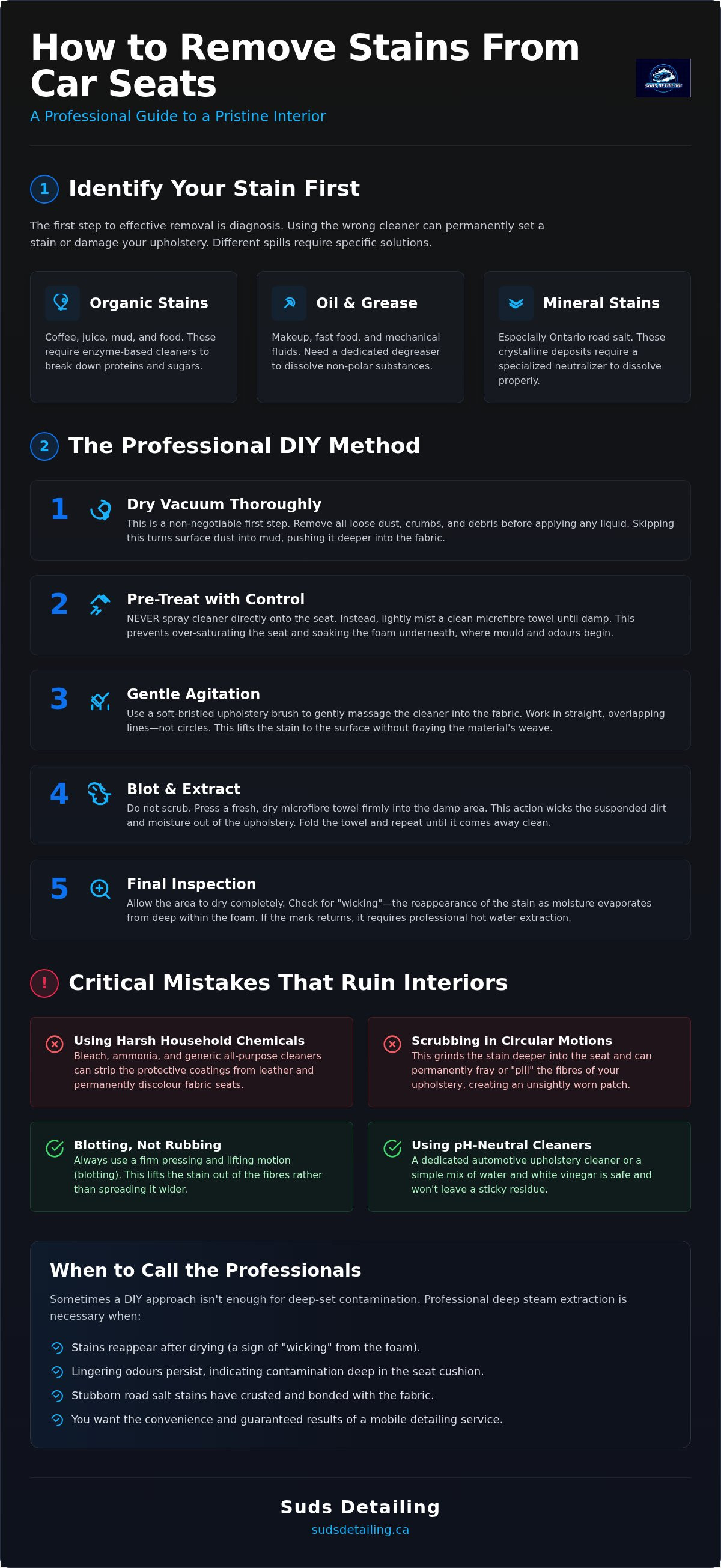
The Professional DIY Method: 5 Steps to Clean Seats
A meticulous approach is the hallmark of any quality restoration. Before you begin the process of learning how to remove stains from car seats, you must assemble a proper kit. You'll need a high-suction vacuum with a crevice tool, several clean microfibre towels, a soft-bristled upholstery brush, and a pH-neutral cleaner. Avoid generic household soaps that can leave a sticky film, which actually attracts more dirt over time.
Step 1: The Dry Vacuum. This is the most overlooked part of the process. You must remove every grain of loose debris and dust before introducing moisture. If you don't, you'll simply turn surface dust into liquid mud, pushing the contaminant deeper into the fabric weave.
Step 2: Pre-treatment. Never spray a liquid cleaner directly onto your upholstery. Instead, mist your microfibre towel until it's damp. This controlled application prevents the fluid from soaking into the seat foam, which is where odours and mould often take root.
Step 3: Agitation. Use your soft brush to gently massage the cleaner into the fabric. Work in straight lines rather than circles to preserve the integrity of the material. You're trying to lift the stain to the surface, not scrub it away.
Step 4: Extraction. Once the stain is loosened, press a fresh, dry microfibre towel firmly into the area. This "dry towel" method pulls the moisture and the suspended dirt out of the fabric. Repeat this until the towel comes away clean.
Step 5: Final Inspection. Once the area is dry, check for any "wicking." If the mark returns, the contaminant is likely trapped deep in the foam and requires professional-grade equipment.
Homemade Solutions That Actually Work
If you don't have a dedicated automotive cleaner, a mixture of one part white vinegar to two parts water with a drop of clear dish soap is effective for many fabric seats. For lingering smells, baking soda is a reliable ally. Sprinkle it over dry seats, let it sit for 30 minutes, and vacuum it away. Avoid "hacks" like using hairspray or shaving cream. These contain alcohols and oils that can degrade modern upholstery coatings and leave behind a greasy residue.
Managing Moisture Levels
Over-saturation is the primary enemy of a clean interior. In our damp Ontario climate, a seat that stays wet for too long becomes a breeding ground for mould and mildew. Always ensure your vehicle has proper air circulation by leaving the windows cracked in a secure area or using a fan to speed up the process. If a spill is too deep for a towel to extract, considering a Full Interior Package with professional steam extraction ensures the seat dries thoroughly from the inside out.
Removing Stubborn Salt Stains: An Ontario Speciality
For drivers across Dufferin County, winter brings a specific interior challenge that standard cleaning methods often fail to address. Road salt, primarily composed of sodium chloride and calcium chloride, behaves differently than organic spills. When the slush from your boots melts onto your upholstery or carpets, it carries these minerals deep into the fibres. As the moisture evaporates, the salt recrystallizes, forming a white, crusty "rock" that bonds to the material. This is why learning about Interior Salt Stain Removal for Ontario Winters is vital for any vehicle owner who takes pride in their cabin.
Standard automotive soaps are generally ineffective against mineral deposits. Soap is designed to surround oils and dirt, but it cannot dissolve the crystalline structure of road salt. If you attempt to use a basic cleaner, you'll likely notice the "salt ring" effect. This occurs because the liquid moves the salt to the outer edges of the damp area. As it dries, the salt concentrates into a visible, hardened perimeter that seems to grow larger and more stubborn with every attempt. Understanding the chemistry of these deposits is the first step in knowing how to remove stains from car seats caused by winter weather.
The Vinegar-Water Solution for Salt Extraction
To break the chemical bond of calcium chloride, you need an acidic agent. A 1:1 solution of white vinegar and warm water is a highly effective DIY neutralizer. The acetic acid in the vinegar reacts with the alkaline salt, dissolving the crystals so they can be extracted. Use a "soak and suck" technique: apply the warm solution to the area, let it dwell for several minutes to break down the minerals, and then use a shop vacuum or a dry microfibre towel to pull the brine out. Heat acts as a catalyst here, making the solution significantly more effective at breaking down hardened deposits.
When Salt Damages the Fibres
Neglecting these stains leads to more than just an unsightly interior. Over time, salt crystals act like microscopic shards of glass, grinding against the fabric fibres every time you sit down or move your feet. This leads to permanent salt "burn," where the carpet or upholstery becomes brittle and loses its colour. Regular mobile car detailing in the Dufferin region prevents this long-term degradation. By keeping the "dead pedal" area and seat edges free of mineral buildup, you protect the structural integrity of your interior and maintain the maximum resale value of your vehicle.
Common Mistakes That Can Ruin Your Interior
While mastering the basics of how to remove stains from car seats is a valuable skill, even the best intentions can backfire without a methodical approach. Using bleach or harsh household chemicals is the most frequent error we see. These substances are far too aggressive for automotive textiles; they strip the factory-applied stain resistance and often leave permanent, pale blotches. You must always test your chosen cleaner on a hidden spot, such as the underside of a headrest, to check for colourfastness. If any pigment transfers to your cloth, the solution is too strong for your specific upholstery.
Your physical technique is just as critical as the chemistry you use. Many owners instinctively scrub in vigorous circles when they see a stubborn mark. This motion is a mistake because it tangles and frays the delicate fabric weave, creating a fuzzy, worn texture that cannot be repaired. Instead, use light, linear strokes to lift the contaminant. If the stain persists, the issue may be deeper than a surface-level wipe can reach.
The Danger of Steam Cleaning Without Extraction
Home steam cleaners are popular tools, but they can cause more harm than good when used improperly. A basic steamer adds heat and moisture but lacks the high-pressure vacuum needed to pull the slurry out of the seat. This often results in "pushing" the liquefied dirt deeper into the seat cushion, which increases the risk of mould growth in the foam. Wicking is the capillary action that brings deep dirt to the surface during drying. Without professional extraction, you'll likely find that the same stain reappears 24 hours later once the fabric has fully dried. This cycle of wetting and drying without removal is a primary cause of lingering interior odours.
Leather-Specific Pitfalls
Leather interiors require a different level of meticulous care. You should never use "magic erasers" on leather seats; these sponges are made of abrasive melamine foam that acts like fine-grit sandpaper. They quickly strip away the protective clear coat that modern manufacturers apply to automotive leather. Once this coating is compromised, the material becomes vulnerable to cracking and dye transfer from clothing. It's also vital to distinguish between a surface stain and worn-off dye. If the area feels rough or looks "sanded," the pigment itself has worn away, and cleaning it will only exacerbate the damage. After any successful cleaning, always apply a high-quality conditioner to restore natural oils. If you're struggling with deep-seated dirt or wicking, you can book a Full Interior Package online to ensure your cabin is treated with professional-grade extraction tools.
When to Call the Pros: The Suds Detailing Advantage
There comes a point where home remedies reach their technical limit. While a vinegar solution or a surface wipe can handle light spills, professional steam cleaning remains the gold standard for how to remove stains from car seats that have suffered deep penetration. The primary difference lies in the equipment. While a household vacuum or a small portable steamer adds moisture and light suction, our industrial-grade extractors are designed to pull liquid and suspended contaminants from up to 2 inches deep within the seat foam. This ensures that the root cause of the stain is removed, not just the visible surface mark.
A common frustration for many Ontario car owners is the phantom stain that reappears 24 hours after a thorough DIY cleaning. This is caused by wicking, a process where deep-seated dirt trapped in the cushion travels up the fabric fibres through capillary action as the seat dries. Because our specialized tools extract moisture from the core of the seat, we eliminate the reservoir of dirt that causes wicking. Beyond aesthetics, this high-temperature process provides essential sanitization. It kills bacteria, mould spores, and allergens that DIY sprays often miss, creating a healthier environment for you and your family.
Our Full Interior Detailing Process
We approach every vehicle with a level of meticulous care that reflects our passion for craftsmanship. Our process is designed to restore your cabin to its peak condition through a systematic, multi-stage approach:
Deep Vacuuming: We use high-velocity air and specialized tools to remove debris from every crevice, nook, and under-seat track.
Steam Treatment: High-temperature steam is applied to break down stubborn proteins, oils, and mineral deposits without soaking the material.
Industrial Extraction: We pull the liquefied contaminants out of the fabric, ensuring the fibres are clean and the drying time is minimized.
Fabric Protection: We offer options to apply a breathable barrier that prevents future spills from immediately soaking into the weave.
Serving Dufferin, Caledon, and Beyond
Busy parents and professionals in our community often don't have the hours required to properly execute a deep interior restoration. This is why we offer the convenience of mobile car detailing packages in Dufferin and the surrounding areas. Whether you're at your home in Orangeville or your office in Shelburne, Grand Valley, or Guelph, we bring the shop to you. Our mobile units are fully equipped to provide the same high-standard results you'd expect from a fixed location. If you're ready to restore your vehicle's interior and protect its long-term resale value, Book your Full Interior Package online today and experience the difference of a truly professional clean.
Restore Your Cabin to Showroom Condition
Maintaining a clean cabin in Ontario requires more than just a quick wipe. You now understand that identifying the chemical origin of a spill and neutralizing winter road salt are the foundations of effective care. While the 5-step DIY method is an excellent first line of defence, some contaminants require the deep extraction power that only professional tools can provide. Mastering the art of how to remove stains from car seats is as much about knowing your limits as it is about using the right technique.
Suds Detailing provides a seamless solution with our mobile service across Dufferin County. We utilize professional steam extraction technology to reach deep into the seat foam, ensuring that odours and bacteria are eliminated rather than just hidden. Whether you need a Full Interior Package for your personal vehicle or specialized fleet services, our meticulous approach delivers a factory-fresh result at your doorstep. Book Your Professional Mobile Interior Detail Now to experience the satisfaction of a truly pristine interior. Your car is a significant investment; a fresh, sanitized cabin ensures it remains a pleasure to drive for years to come.
Frequently Asked Questions
Can I use laundry detergent to clean my car seats?
You should avoid using laundry detergent on your upholstery because it's designed for high-volume water rinsing. Without a washing machine's cycle, the soap remains trapped in the fabric fibres. This creates a sticky residue that attracts dirt faster than before. Instead, choose a pH-neutral automotive cleaner or a mild vinegar solution. These options provide a cleaner finish without the risk of chemical buildup that ruins the texture of your seats.
How do I get coffee stains out of my car seats once they have dried?
Dried coffee requires rehydration with an enzyme-based cleaner to break down the organic proteins and sugars. Apply the solution to a microfibre cloth first to control moisture levels. If the spill was significant, the liquid likely reached the seat foam. In these cases, learning how to remove stains from car seats at home might not be enough. Professional steam extraction is often required to pull the deep-seated particles to the surface.
What is the best way to remove salt stains from car carpets in Ontario?
The most effective way to dissolve white mineral crusting is a 1:1 mixture of warm water and white vinegar. This acidic solution breaks the chemical bond of the road salt. Apply it sparingly and allow it to dwell for several minutes before extracting the slurry with a shop vacuum. For residents in Orangeville and Shelburne, regular treatment during the winter prevents these minerals from permanently burning the carpet fibres and reducing your vehicle's value.
Will steam cleaning my car seats remove old odours?
Steam cleaning is the most reliable method for eliminating lingering smells because it kills bacteria and mould spores at their source. Unlike scent-heavy sprays that simply mask the issue, high-temperature steam reaches into the porous foam to neutralize contaminants. This process effectively manages the wicking effect, ensuring that the odour doesn't return once the fabric dries. It's a core component of our Full Interior Package for a truly sanitized cabin.
How long does it take for car seats to dry after a deep clean?
Most car seats will dry within two to four hours after a professional deep clean. This timeframe depends heavily on the ambient humidity in the Dufferin region and the amount of airflow provided. We recommend leaving your windows cracked or using a portable fan to accelerate the process. Because our professional extractors utilize high-pressure suction to remove the majority of the moisture, drying times are significantly shorter than traditional "wet" cleaning methods.
Can all stains be removed from vehicle upholstery?
While we can successfully treat the vast majority of spills, some damage is permanent. Stains caused by harsh acids, permanent dyes, or heavy road salt can "burn" the fabric or strip the pigment from the weave. If the material's structural integrity is compromised or the dye is gone, cleaning cannot restore the original colour. However, our specialized steam cleaning often lightens these areas significantly, making them far less noticeable to the naked eye.
Is it worth getting a professional interior detail before selling my car?
Investing in a professional interior detail is one of the most effective ways to maximize your vehicle's resale value. Potential buyers often equate a clean, fresh-smelling cabin with a well-maintained engine and mechanical system. Removing years of grime and salt buildup creates a powerful first impression that justifies a higher asking price. It's a strategic move that frequently returns its cost several times over during the final sale negotiation.
Do you offer mobile car detailing in Caledon and Orangeville?
Yes, Suds Detailing provides full mobile service throughout Caledon, Orangeville, and the broader Dufferin County area. We bring our professional steam cleaning equipment directly to your home or office, providing ultimate convenience for busy professionals and families. Our service area also includes Shelburne, Grand Valley, and Guelph. This mobile approach ensures you receive meticulous interior care without the need to drop your vehicle off at a distant shop.


Comments