How to Maintain a Clean Fleet Vehicle and Manage Costs

A clean fleet is maintained between washes, not just during them. A practical routine for how to maintain a clean fleet vehicle combines quick exterior washes during the week, a weekly cab clean-up, and a more detailed interior and exterior service each month. During salt season, include an underbody rinse to remove residue that can contribute to deterioration.
Keeping vehicles presentable takes more than occasional washing. Good driver habits, clear cleaning responsibilities, and consistent records make upkeep manageable and help staff spot spills, damage, or emerging maintenance concerns.
This guide explains how to set a fleet cleaning policy, assign daily responsibilities, choose wash methods for different vehicles, and record maintenance details and costs. You’ll also learn how to adapt the routine to your fleet’s use and conditions, so each vehicle gets the right care at the right time.
Table of Contents
1. Fleet cleaning policies and driver responsibilities
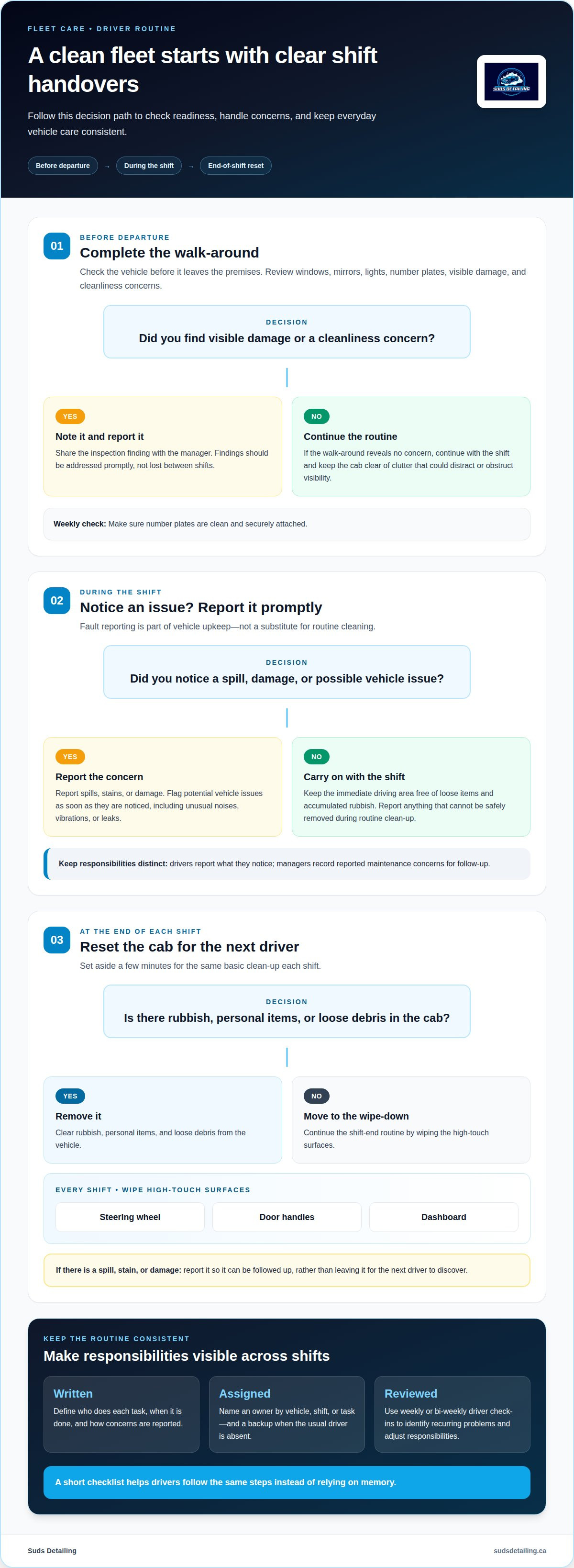
A practical approach to how to maintain a clean fleet vehicle starts with a written policy. Define which tasks drivers complete, when they do them, and how they report concerns. Distinguish routine cleaning from mechanical maintenance, while making clear that both belong in the vehicle’s upkeep plan. For example, a driver can remove rubbish at shift-end, while a manager records a reported fluid leak for follow-up.
Make the routine specific enough to follow across vehicles and shifts. Ask drivers to spend a few minutes at the end of each shift removing rubbish, personal items, and loose debris. They should wipe high-touch surfaces, including the steering wheel, door handles, and dashboard. Specify where cleaning supplies belong and how to report spills, stains, or damage. A short checklist helps drivers follow the same steps instead of relying on memory.
Training turns policy into consistent practice. Show drivers which cleaning methods suit the vehicle’s surfaces, how to use supplies, and which areas need careful attention. Explain why exterior cleanliness matters: dirt and salt can obscure early signs of rust or deterioration. Make fault reporting part of the same lesson. Drivers should report potential vehicle issues as soon as they notice them, including unusual noises, vibrations, or leaks.
Build a walk-around into the departure routine. Commercial fleet drivers should inspect each vehicle before it leaves the premises, noting visible damage and cleanliness concerns. Include windows, mirrors, lights, and number plates in the visual review. Check number plates weekly to ensure they’re clean and securely attached. Managers should address inspection findings promptly, rather than letting a reported issue disappear between shifts.
Cleaning also supports driver attention. Loose objects, accumulated rubbish, or an obstructed window can distract the driver or interfere with visibility. A clear cab means fewer items to manage on the road. Keep the immediate driving area free of clutter, and report anything that can’t be safely removed during routine clean-up.
Tailor the policy to the fleet’s purpose. A sales vehicle carrying clients may need a higher presentation standard than a work vehicle used on muddy sites. Set expectations for both appearance and function, then review compliance through regular inspections. Weekly or bi-weekly driver check-ins can reveal recurring problems, while recognition can encourage consistent care. These habits can support savings by helping catch small concerns early and reduce avoidable neglect.
For vehicles carrying food, hazardous materials, or passengers, cleaning requirements depend on the cargo, service, and applicable operating rules. Use procedures suited to the specific contamination risk and transport activity, rather than assuming one cleaning standard works for every fleet.
2. Assigning cleaning responsibilities
A cleaning plan works best when every task has a named owner. Assign responsibility by vehicle, shift, or task, then record the assignment where drivers and supervisors can see it. For example, the driver returning van 12 can handle the cab reset, while the next assigned driver confirms the vehicle is ready before departure. This prevents shared vehicles from becoming nobody’s responsibility.
Separate routine upkeep from scheduled deeper cleaning. Drivers can handle small, immediate tasks during handovers, such as removing rubbish or wiping a fresh spill. A designated fleet lead can coordinate weekly cabin checks and monthly interior appointments. Keep technical inspections with those responsible for vehicle maintenance, so cleaning duties don’t replace checks of lights, tires, or other safety-related components.
Match assignments to how each vehicle is used. A service van carrying tools may need a designated place for equipment and regular removal of packaging. A passenger vehicle needs attention to seat surfaces, door pockets, and the area around each seat. For a vehicle shared across shifts, use a simple handover record showing who completed the clean-up and whether anything needs follow-up.
Use a task matrix to make ownership clear without adding complicated paperwork. Include the vehicle identifier, assigned role, task, completion point, and space for exceptions. For instance, mark “interior reset” complete, then note a coffee spill that needs more than routine wiping. The supervisor can route that exception to the right person instead of leaving the next driver to discover it.
Build backup coverage into the assignment. If the usual driver is absent, name a backup role rather than leaving the task unassigned. For a rotating crew, the shift lead can confirm completion during handover and flag missed work. Review recurring gaps during manager check-ins, then adjust assignments if a route, vehicle type, or workload makes the original split impractical.
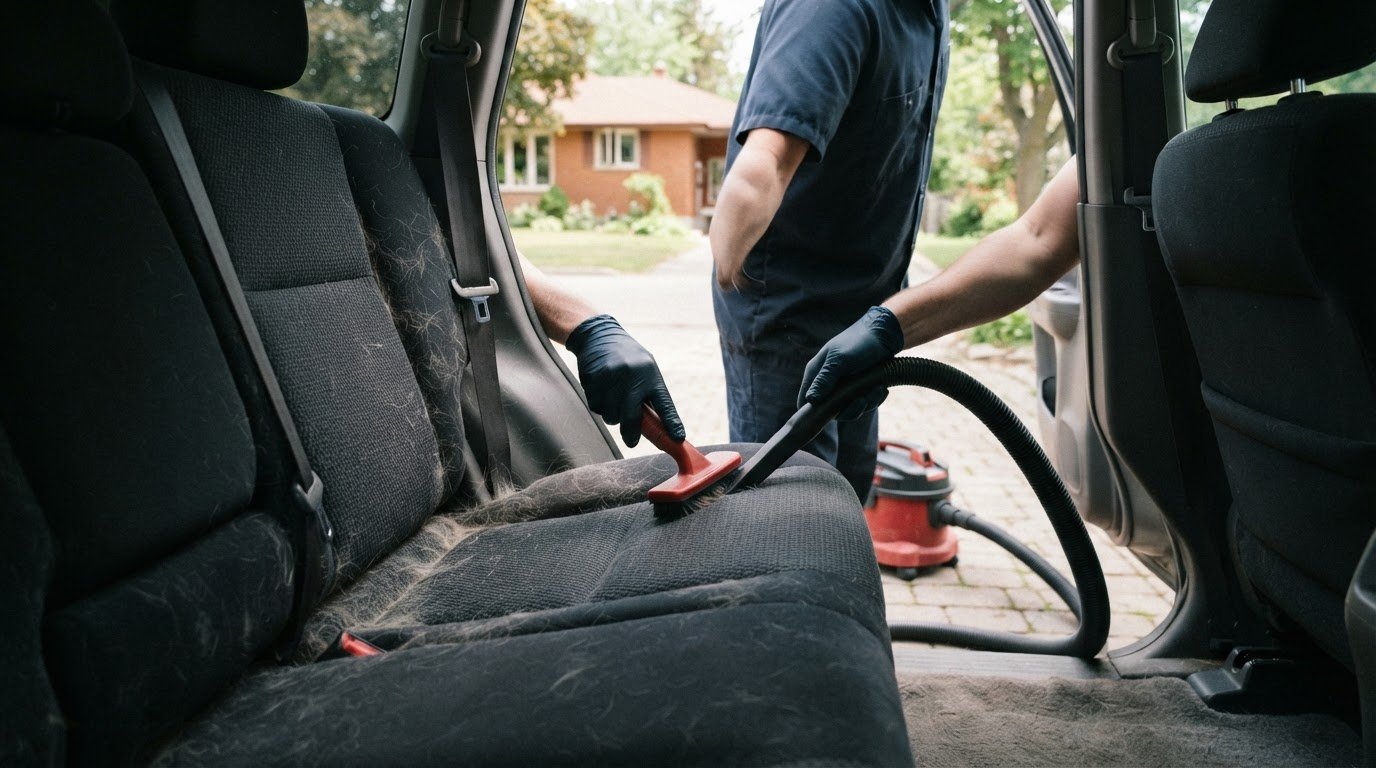
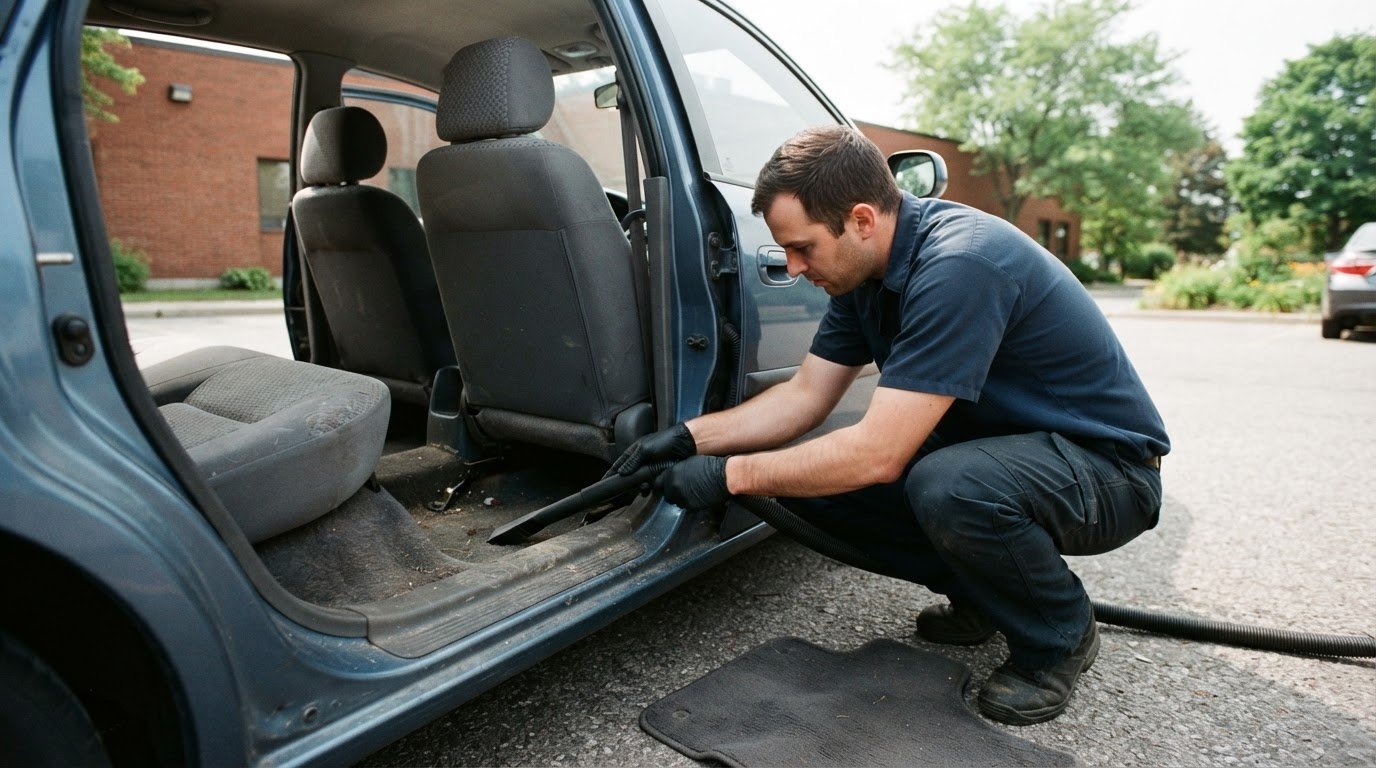
Distinguish quick care from professional interior work. Drivers can keep the cabin orderly, while a scheduled service handles more intensive cleaning. The Basic Interior Package suits routine cabin care, while the Full Interior Package is an option for a more comprehensive interior reset. Scheduling that work helps fleet managers track which vehicles have received deeper attention.
For vehicles needing a more thorough cabin reset, schedule an interior detailing appointment alongside the fleet’s routine responsibilities. Keep the vehicle assignment and service record together, so supervisors can see who maintains daily order and when professional interior care is completed.
3. Choosing wash methods for different fleet vehicles
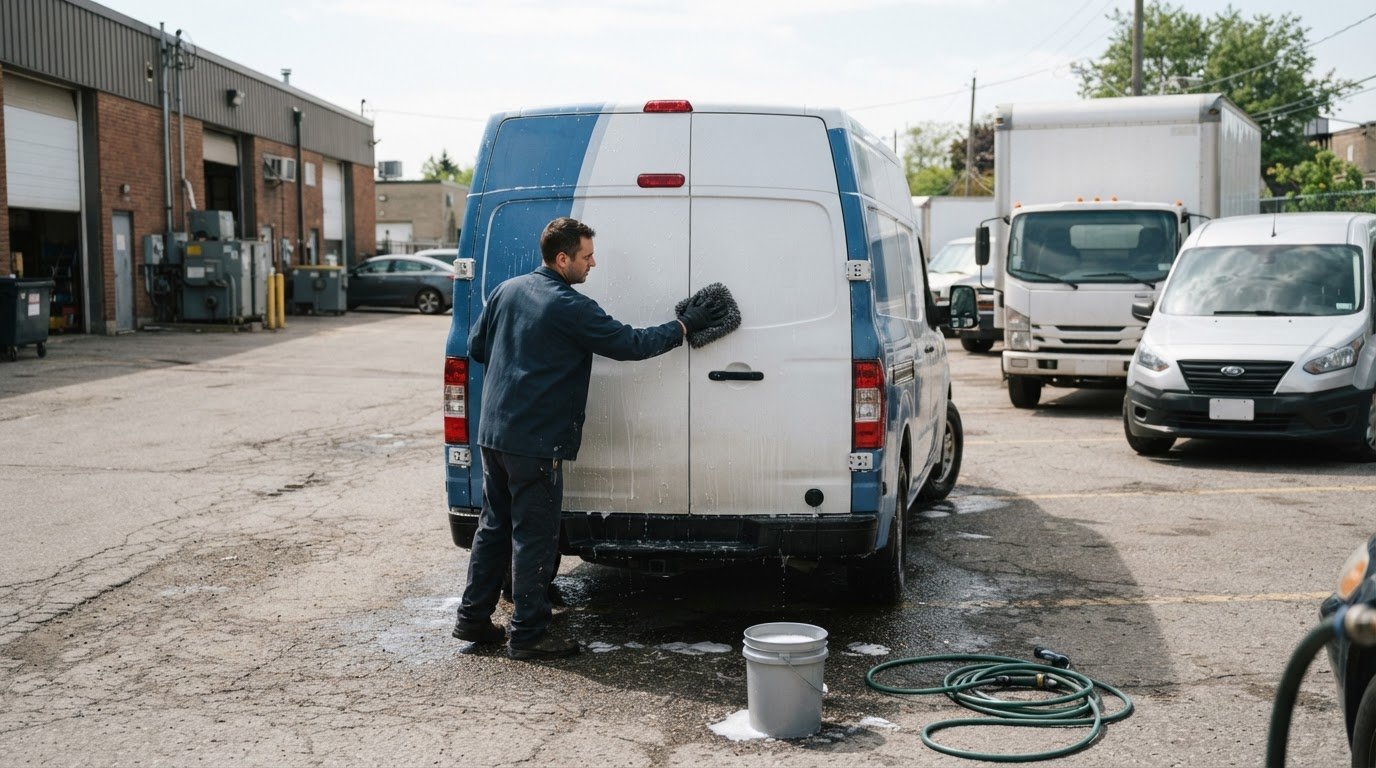
Choose a wash routine based on each vehicle’s work, exposure, and visible soil. A sales vehicle used for client visits may stay presentable with a weekly wash and regular interior touch-ups. Delivery vans and rideshare vehicles may need exterior washing several times a week because frequent stops and passenger use add dirt quickly.
Construction vehicles face a different pattern. Mud and dust can build up daily, so inspect the body, steps, wheels, and visible safety components after demanding work. Remove heavy soil before it dries and becomes harder to clear. Match the cleaning method to the residue instead of applying the same routine to every fleet vehicle.
Winter changes the priority. During salt season, include an underbody rinse to remove road salt from exposed areas. Salt and grime left on the exterior can damage paint and make deterioration harder to spot. Pay special attention to exterior safety sensors, and clean windows and mirrors inside and out for clear visibility.
Improper washing can leave salt, dirt, or cleaning residue behind, while careless techniques can damage vehicle surfaces or affect exterior safety sensors. Uncontrolled rinsing also wastes water. Focus water where soil has collected and avoid repeating passes over clean areas. In winter, prioritize an underbody rinse to remove road salt.
Before choosing a method, identify the surface and the kind of buildup. A light layer of road dust needs a different level of attention than dried mud around a work vehicle’s wheels. Keep the approach consistent, but give extra attention to areas that need it. For example, inspect lower panels after slushy routes and mirrors after frequent passenger pick-ups.
A practical schedule can combine quick exterior washes during the week, a weekly cab clean-up, and a more detailed interior and exterior service each month. This layered routine prevents a monthly deep clean from becoming the only response to daily use. Keep basic supplies such as trash bags, disinfectant wipes, and window cleaner in fleet vehicles for small, immediate clean-ups.
Adjust the schedule based on vehicle condition, not habit alone. A sales vehicle on clean paved routes may need less frequent exterior attention than a van repeatedly travelling through construction zones. Review soil patterns, seasonal salt exposure, and how quickly visibility surfaces get dirty. Record recurring needs by vehicle type, then refine the wash plan to protect components without unnecessary passes.
Small fleets that wash once or twice a month may find prepaid services more suitable than an unlimited plan. When choosing between options, consider each vehicle’s actual wash pattern rather than assuming every unit needs the same arrangement. A vehicle on paved routes may not need as frequent washing as one exposed to mud or winter salt. Review recurring soil and exposure, then choose an approach that fits. This keeps wash planning aligned with the vehicle’s condition and allows adjustments as work patterns or seasons change.
4. Recording mileage, fluid levels, parts, vendors, and costs
A consistent vehicle record turns separate inspections and repairs into a useful maintenance history. Create a report for each fleet vehicle, using its identifier to connect inspection notes, service records, and receipts. Record current mileage, fluid levels, replaced parts, vendors, unscheduled maintenance, and maintenance costs. This baseline helps managers understand each vehicle’s condition and compare later work with its starting point.
Use the same fields every time, whether records are stored in fleet management software or a shared maintenance system. A digital checklist can prompt drivers or inspectors to enter information consistently. Include the inspection date, odometer reading, item checked, finding, and any follow-up action. Attach maintenance receipts to the matching vehicle record instead of keeping them separately.
Mileage: Record the odometer reading at each maintenance event.
Fluids: Note levels and any visible leaks or unusual changes.
Parts: Identify replaced components and the service date.
Vendors: Record who completed the work and retain the receipt.
Costs: Enter the expense under the vehicle and maintenance type.
Make records useful for decisions, not just storage. If a vehicle repeatedly needs the same repair, its history gives managers a clear pattern to investigate. For unscheduled work, record what prompted it and the corrective action taken. Preserve inspection findings too, including minor concerns that may need monitoring rather than immediate repair.
Set each vehicle’s maintenance schedule around the manufacturer’s recommendations and its operating conditions. Mileage can guide schedules for road vehicles, while engine hours may suit on-site equipment. A fleet checklist should reflect vehicle class and type, since a delivery van and a work truck may have different service needs. Vehicles shared among drivers or used off-road may need shorter maintenance intervals.
Use records to connect routine checks with planned service. A checklist can track fluid levels, battery condition, and other inspection findings, while the maintenance log captures completed work. When recording an oil or filter change, include the mileage and parts used. This makes the next service easier to plan and helps prevent missed work during shift changes or handovers.
Review vehicle reports regularly to spot overdue tasks, repeat repairs, and rising costs. Fleet management software can record issues, schedule maintenance checks, and review real-time diagnostics. Managers can then compare service histories across vehicles, identify recurring problems, and adjust schedules using documented patterns rather than guesswork.
5. Washing and detailing fleet vehicles
Regular washing is part of asset care, not just presentation. Dirt, grime, and road salt can damage paint, while a clean exterior makes rust and deterioration easier to notice. Clean windows and mirrors inside and out, and pay particular attention to exterior safety sensors. Grime over a sensor can interfere with its function.
Choose cleaning products according to the surface. Use products intended for vehicle paint on painted panels, and select upholstery cleaners suited to the specific fabric or leather. Check that a product suits the material before applying it. Keep water and cleaning solution away from electronic controls; apply cleaner to a cloth rather than spraying directly onto screens, switches, or connectors.
Match equipment and pressure to the area being cleaned. Use a controlled rinse to loosen surface dirt, and avoid directing concentrated pressure at sensors, seals, wiring, or delicate trim. Don’t assume a general exterior wash method is suitable for the engine area. Focus cleaning on surfaces and components the method is designed to handle.
Canadian winters call for particular attention to salt. After driving on salted roads, arrange a wash that includes an underbody rinse, where residue can collect out of sight. Check lower panels, wheel areas, and exposed components for remaining salt and grime. Rust protection can supplement washing, but it doesn’t replace removing salt and dirt.
A practical fleet routine can combine quick exterior washes during the week, a weekly cab clean-up, and a more detailed interior and exterior service each month. Adjust the pattern to vehicle use: a delivery van on muddy routes may need more frequent cleaning than a sales vehicle on paved roads. Record the date and service completed for each vehicle, then refine the schedule based on visible buildup and seasonal conditions.
Detailing also supports inspection. Removing grime makes it easier to spot paint deterioration, new damage, or residue around safety sensors. Inside, deep-clean upholstery with products suited to its material, and clean glass for clear visibility. This makes cleaning part of a broader preventive maintenance routine, rather than just a cosmetic task.
Regular cleaning can help protect vehicle surfaces by removing damaging dirt and salt, and reveal early deterioration that needs attention. Preventive maintenance is less costly than waiting to fix problems after they arise. Washing supports this approach, but doesn’t replace mechanical inspections or repairs.
Suds Detailing: Fleet Services
Suds Detailing provides Fleet Services for businesses that need dependable vehicle care. Turn to this service when routine driver clean-ups aren’t enough to keep fleet vehicles presentable, or when you want professional detailing built into your maintenance plan.
Choose the package that suits each vehicle’s needs. The Basic In & Out Package combines interior and exterior care, while the Full In & Out Package offers a more comprehensive service. For vehicles needing cabin attention, the Basic Interior Package focuses on interior care. Fleet detailing includes steam cleaning, vacuuming, and hand washing.
Share your fleet’s cleaning priorities with Suds Detailing and discuss a suitable next step. Contact Suds Detailing to arrange fleet vehicle care.
Make fleet cleanliness part of daily operations
A reliable way to maintain a clean fleet vehicle is to treat cleanliness as an operating standard, not an occasional reset. Learning how to maintain a clean fleet vehicle means building the routine into shift handovers, vehicle records, and planning as routes, workloads, and seasons change. Use recurring inspection findings to identify where the process needs adjustment, then make ownership clear for every vehicle.
Start with one manageable improvement: choose a recurring cleaning gap and assign responsibility for addressing it. Track whether the change works through driver feedback and vehicle condition, then refine the routine based on what you observe. This steady approach keeps fleet care organized without unnecessary complexity.
If professional detailing would support your fleet’s care plan, contact Suds Detailing today to discuss the next step. With clear expectations and a consistent process, you can build a cleaner, more presentable fleet with confidence.
Frequently Asked Questions
What is a daily fleet vehicle cleaning and inspection checklist?
A useful daily checklist pairs a cabin review with a brief condition check. Confirm that seats and seat belts are unobstructed, windows and mirrors are clear, and the floor area is free of loose items that could shift while driving. Note visible leaks, damaged trim, or warning lights in the vehicle record. This gives the next driver and fleet manager a clear handover instead of relying on memory.
How often should fleet vehicles be washed, detailed, and disinfected?
Set wash frequency according to vehicle use and exposure: a sales vehicle may suit a weekly wash, while delivery vans can need exterior washing several times a week. Schedule more detailed interior and exterior service regularly, adjusting for road salt, mud, and passenger use. Wipe high-touch surfaces after shared use or visible contamination; set cleaning frequency according to how often drivers share the vehicle and how it is used.
How to clean a fleet vehicle interior and exterior efficiently?
Work in a consistent sequence so clean areas stay clean. Remove loose rubbish, then vacuum the cabin before wiping the dashboard, console, and door panels. Clean interior glass last to catch residue from earlier steps. For the exterior, rinse away loose dirt before washing painted panels, then finish with windows, mirrors, and wheels. Use products suited to each surface, and keep liquids away from electronic controls.
How to set up a fleet vehicle cleaning schedule and assign responsibilities?
Build the schedule around vehicle use, shift handovers, and return times. For example, assign the returning driver a short cabin reset, then have the shift lead record completion and flag issues for follow-up. Give each vehicle a backup owner for absences, and use a shared calendar to reserve deeper cleaning periods. Review missed tasks and recurring messes during check-ins, then revise assignments to fit actual routes.
Comments